Wednesday, 17 June 2015
Monday, 8 June 2015
Choosing Peace over Violence
Session 8 ... we are now closer to the end. But for me, this will be a journey to remember, a journey to cherish!
This was by far the most interesting session in #GlobalConversations. Now wonder we overshot time and continued to discuss until our enthused spirits permitted us. While the focus of the session was on violence and its varying manifestations, the primary point of debate was a question on whether 'men too are victims of patriarchy?" Not surprisingly, we agreed to disagree. Precisely, why we are conversing.
In whatever limited understanding I have developed about peace, it has been reiterated that one cannot understand the dynamics of peace without delving deeper into the phenomena of 'conflict' and 'violence'. The dichotomous tendencies associated with the two terms ensure that while we embrace peace, we detest violence. While there are negative, undesirable values associated with the philosophy and actions that condone violence, I get uncomfortable when I am told that total eradication of violence is what human race should aim for. Apart from being an ideal state of affairs, what one needs to question is whether this is actually desirable. Violence definitely does have disastrous effects as it leads to loss of life and property, nature and its creation. But violence is essential for the progress of human race. It has over times led to evolution of the human kind. The existence of unjust systems and practices cannot be denied. It is a reality that one encounters each day. At times, when there are few options left, it is violence that has helped to overturn these structures and ensure that liberty, equality and rights remain firm. Violence must not be examined from the spectrum of 'good' or 'bad', since these water-tight compartments aren't really going to help us to attain peace. At times, violence is good, it is the only choice that one is left with, and its eventual consequences turn out to be positive and life-changing. We have occupied a cycle of evolution in which we are bound to confront ills, wrongs. That is where human beings face a challenge. They are presented with a choice - to pick either violent means, or to choose peaceful ones. I believe it is unfair to judge which of these means is more forthright and moral, since the context and circumstances of putting this to use is inevitable when explaining our choice.
When a woman or a man faces domestic abuse, she/he may choose to react violently owing to several factors such as anger, frustration, fear. In cases of sexual harassment on streets, what choice is one left with, if one is overpowered by the assaulter. Thus, there are no clear boundaries to be drawn as the lines of distinction disappear when one is left to make a choice. This choice is better left to the individual and her/his circumstances. I have seen women suffering violence and then emerging as victorious in life. Facing violence at the hands of their near and dear ones, they realized that they did not deserve this. Violence provided the much needed impetus to take a decision that led to self-worth and dignity. In such cases, violence provided the push towards a peaceful and dignified life. This obviously does not mean that violence has to be endorsed. It should always be avoided and be considered as a last resort. Don't we do that in our everyday negotiations with life? Faced with any problem, we make attempts to resolve it with peace and resilience, failing which people have a tendency to take to violence.
For me, choosing peace over violence has not come naturally. In a previous post, written on this very blog, I have been candid to admit that peaceful behaviour is indeed demanding and requires much moral courage. This then cannot be an excuse to resort to violence. In everyday interactions with people who come from a platform of different world views, I have often experienced anger and frustration which has led me to 'thinking violently'. I have then consciously chosen to control my emotions, talk to myself, reassuring my own self that a disagreement is fine, and even if the person remains totally on the wrong, I have told myself to continue to be friendly and move on. Nevertheless, this has at times led to immense frustration wherein my brain tells me that I should resort to some kind of violence, whereas my heart tells me to adopt a more peaceful approach.
What works best for me is when I turn violent (I am quite sure about not hitting any one, but verbal violence is a possibility), I'd like to shut myself off from everyone around me, isolate myself, move to a corner, give myself some breathing space and talk ... assure that things are fine, or will eventually be fine. In another conscious attempt, I try to think about the disastrous consequences of what will happen if a violent reaction were to emanate from my end. It would aggravate an already spoiled situation and in turn affect relationships. One way of consciously choosing peace over any kind of violence is to introspect past actions and see and decide for oneself, the kind of consequences violence leads to. That will help make a sane/rationale choice.
I want to end with a mundane example. These days road rage is a common occurrence in India. You often can see people getting off their vehicles to trash the other person, either physically or verbally, arguing and counter-arguing over who was in the right lane and who wasn't, who was driving properly and who wasn't. This often has led to cases of road rage, with people ready to kill the other person for a perceived fault. While driving, I realized that I was not indulging in physical violence but was emitting a lot of negative emotions, energy directed towards people I thought were bad at driving and lacked basic traffic sense. At times, stopping in the middle of the road, I have abused the offender to attain a level of gratification, only to be consumed with hatred for the next hour. This wasn't helping me of course. I then decided to switch gears, choosing to not react at all or react with a smile. These days, I don't rue that people have a poor sense of traffic. Instead, I smile at them and let them proceed first understanding that are experiencing a greater sense of hurry and urgency than I am. At the end of the day, on the roads, with my vehicle, I feel peaceful and happier as I drive my way to my destination.
This was by far the most interesting session in #GlobalConversations. Now wonder we overshot time and continued to discuss until our enthused spirits permitted us. While the focus of the session was on violence and its varying manifestations, the primary point of debate was a question on whether 'men too are victims of patriarchy?" Not surprisingly, we agreed to disagree. Precisely, why we are conversing.
In whatever limited understanding I have developed about peace, it has been reiterated that one cannot understand the dynamics of peace without delving deeper into the phenomena of 'conflict' and 'violence'. The dichotomous tendencies associated with the two terms ensure that while we embrace peace, we detest violence. While there are negative, undesirable values associated with the philosophy and actions that condone violence, I get uncomfortable when I am told that total eradication of violence is what human race should aim for. Apart from being an ideal state of affairs, what one needs to question is whether this is actually desirable. Violence definitely does have disastrous effects as it leads to loss of life and property, nature and its creation. But violence is essential for the progress of human race. It has over times led to evolution of the human kind. The existence of unjust systems and practices cannot be denied. It is a reality that one encounters each day. At times, when there are few options left, it is violence that has helped to overturn these structures and ensure that liberty, equality and rights remain firm. Violence must not be examined from the spectrum of 'good' or 'bad', since these water-tight compartments aren't really going to help us to attain peace. At times, violence is good, it is the only choice that one is left with, and its eventual consequences turn out to be positive and life-changing. We have occupied a cycle of evolution in which we are bound to confront ills, wrongs. That is where human beings face a challenge. They are presented with a choice - to pick either violent means, or to choose peaceful ones. I believe it is unfair to judge which of these means is more forthright and moral, since the context and circumstances of putting this to use is inevitable when explaining our choice.
When a woman or a man faces domestic abuse, she/he may choose to react violently owing to several factors such as anger, frustration, fear. In cases of sexual harassment on streets, what choice is one left with, if one is overpowered by the assaulter. Thus, there are no clear boundaries to be drawn as the lines of distinction disappear when one is left to make a choice. This choice is better left to the individual and her/his circumstances. I have seen women suffering violence and then emerging as victorious in life. Facing violence at the hands of their near and dear ones, they realized that they did not deserve this. Violence provided the much needed impetus to take a decision that led to self-worth and dignity. In such cases, violence provided the push towards a peaceful and dignified life. This obviously does not mean that violence has to be endorsed. It should always be avoided and be considered as a last resort. Don't we do that in our everyday negotiations with life? Faced with any problem, we make attempts to resolve it with peace and resilience, failing which people have a tendency to take to violence.
For me, choosing peace over violence has not come naturally. In a previous post, written on this very blog, I have been candid to admit that peaceful behaviour is indeed demanding and requires much moral courage. This then cannot be an excuse to resort to violence. In everyday interactions with people who come from a platform of different world views, I have often experienced anger and frustration which has led me to 'thinking violently'. I have then consciously chosen to control my emotions, talk to myself, reassuring my own self that a disagreement is fine, and even if the person remains totally on the wrong, I have told myself to continue to be friendly and move on. Nevertheless, this has at times led to immense frustration wherein my brain tells me that I should resort to some kind of violence, whereas my heart tells me to adopt a more peaceful approach.
What works best for me is when I turn violent (I am quite sure about not hitting any one, but verbal violence is a possibility), I'd like to shut myself off from everyone around me, isolate myself, move to a corner, give myself some breathing space and talk ... assure that things are fine, or will eventually be fine. In another conscious attempt, I try to think about the disastrous consequences of what will happen if a violent reaction were to emanate from my end. It would aggravate an already spoiled situation and in turn affect relationships. One way of consciously choosing peace over any kind of violence is to introspect past actions and see and decide for oneself, the kind of consequences violence leads to. That will help make a sane/rationale choice.
I want to end with a mundane example. These days road rage is a common occurrence in India. You often can see people getting off their vehicles to trash the other person, either physically or verbally, arguing and counter-arguing over who was in the right lane and who wasn't, who was driving properly and who wasn't. This often has led to cases of road rage, with people ready to kill the other person for a perceived fault. While driving, I realized that I was not indulging in physical violence but was emitting a lot of negative emotions, energy directed towards people I thought were bad at driving and lacked basic traffic sense. At times, stopping in the middle of the road, I have abused the offender to attain a level of gratification, only to be consumed with hatred for the next hour. This wasn't helping me of course. I then decided to switch gears, choosing to not react at all or react with a smile. These days, I don't rue that people have a poor sense of traffic. Instead, I smile at them and let them proceed first understanding that are experiencing a greater sense of hurry and urgency than I am. At the end of the day, on the roads, with my vehicle, I feel peaceful and happier as I drive my way to my destination.
Thursday, 4 June 2015
About Art and Fences
Session 4 of the Building Peace Project saw Team Hope trading insights on whether art can be used as a medium for peace advocacy. We were encouraged to examine a work of art and explain how effective it was in delivering a message of peace.In this context, I have opted to discuss the book 'The Boy in the Striped Pajamas' by author John Boyne through this blog. Big, big, big shout out to Kirthi Di for recommending and sharing the book! If anyone wants to read the book, fair warning, major spoilers ahead!
The Boy in the Striped Pajamas is a novel set during World War II. The story is told from the perspective of Bruno, a nine year old German boy. He lives with his mother, elder sister and government Officer father in Berlin. They are visited by the Fury, a childish pronunciation of the Führer, who promotes Bruno's father to the position of Commandant. This results in Bruno's family moving away from Berlin to the outskirts of a place called Out-With, an euphemism for Auschwitz. Here Bruno encounters a strange boy, separated from him by a huge fence and wearing comfortable black and white pajamas. This is Shmuel, a young Jewish boy displaced by the Nazis from Poland. Delighted to find someone of his own age, Bruno visits Shmuel everyday. Sitting on opposite sides of the fence, they share food, stories and a fast friendship. So much that one day Bruno decides to crawl under the fence and don a pair of black and white pajamas to look for Shmuel's missing father. During this adventure, they are caught in a death march to the gas chambers and never make it back to the fence.
I found The Boy in the Striped Pajamas to be a fascinating and slightly disturbing story. The naivete pervasive throughout is what makes the story absorbing yet baffling. It doesn't seem likely that even a precious 9 year old would be so innocent of the atrocities committed in his back yard or even of the propaganda and prejudice designed for young Germans during this period. All discussions about the concentration camp and Bruno's father's job, often whispered, are conducted in a atmosphere of fear or confusion that is only too plausible, as are Shmuel's doubt, pain and silence. The similarities between Bruno and Shmuel compel us to take a deeper look at what indeed separates the two boys. The attachment between them is endearing and makes the ending so much more devastating for a reader. Their death makes it starkly evident that naive tone of the book was only beguiling. It had been long since lost on both sides of the fence when such things happened.
This book is touted by the author as a Holocaust fable. It distorts history in facts like there were no children as young as Shmuel in the camp and the electrified fences were guarded constantly. Amid accolades and fame for the book, the author has also been criticized for these inaccurate depictions. This brings out a challenge that artists often face when art is used for peace advocacy. During our session as well, we wondered whether or not art oversimplifies the subject matter. This was clearly illustrated to me by The Boy in the Striped Pajamas. In this case the simplicity was also what made the story work, which begets the question, how far is it advisable to take art, ambiguous by nature, towards explaining a sensitive topic as conflict. While it is certainly a very insightful way of putting a message across, we must also remember that we are so vulnerable when it comes to art. It is difficult to draw precise boundaries, what is merely a creative view on the situation and what is an infringement.
In this scenario, I think clarity and purity of intent in producing or attempting to interpret a particular art work is the responsibility of both the author and the reader. We have a duty to approach such art and respond to it with empathy and sensitivity. Going back to The Boy in the Striped Pajamas, the author John Boyne states that the only way he could treat the Holocaust respectfully was to view it through the eyes of a child. He uses this creative devices to make us question and think about fairness in face of cruelty, kindness that comes with a cost and challenging established world views in individual and personal ways. Beating down undeserved prejudice one person at a time.
I loved this book and I learned a lot from it. It is going to stay with me forever. The message of peace was effectively delivered when the author spoke about looking beyond and destroying fences as the one that divided Bruno and Shmuel. And ultimately, ensuring that such things don't happen, 'not in this day, not in this age.'
Tuesday, 2 June 2015
Forgiving is a difficult choice
For me, it has never been quite easy to forgive. Forgive anybody who has hurt me. The hurt has, in most cases, stayed on with me since my memory is quite sharp and I usually tend to remember situations and encounters of injustice that I have faced in life. I must admit, that to forgive one has to be brave, full of strength and compassion and willing to look beyond what I call the situation that one is faced with. Reconciling forgiveness and justice is not as easy task for anybody. To forgive, one has to be sure of the fact that justice has been delivered and now one can move ahead in life. More often than not, we tend to be too caught up in situations, engulfed by anguish and hurt that consumes us more than the person whom we pronounce guilty of committing the act of injustice.
I am yet to arrive at a situation in life where justice and forgiveness have crossed roads, trying to meet up. One or the other has always eluded me. If I am able to forgive, a sense of injustice creeps on within me and I begin to question the validity of forgiving the person who hurt me. A sense of justice renders me a proud and arrogant person who then assumes a mask of victory, while believing that when I have got what I deserved, forgiving the one who did wrong is immaterial. Trying to thus bring justice and forgiveness on the same platform is an arduous task. There have been instances of friendships going sour for me. The feeling of having done too much, having invested so much of my energy in a relationship without getting much in return except bitterness and an ungrateful attitude. At times, I have forgiven people for the sake of it. At times, it has been for letting ill-feelings drown because I was harbouring them at the cost of my own health and peace of mind. There are times when I have forgiven just to move on, because holding on to things was making life difficult. Over time, I realize that I have to make a conscious choice to forgive, it does not come quite naturally to me.
Forgiveness is an attribute of the strong and the compassionate. It is quite misunderstood to be a trait possessed by weak and mild people who are believed to lack the courage to hurt people. Is there any sense of victory in harming people just because they have not been kind to you? It in fact gives rise to a series of chain reaction and leads to a situation that turns quite ugly for the parties involved. You might never want to end up face to face with that person, never want to communicate with him/her, never want to be left alone to tackle a situation with him/her. The power of forgiving is such that it not only heals the person who is the perpetrator of 'hurt' but also the person who has been the victim of injustice. Forgiving is key to healing, to moving on, moving ahead in a positive manner. It is the key to peaceful co-existence since the sooner we forgive, the better the bonds can be forged. Forgiving is quite an under-rated value attached to peace. It is often ignored and its significance not realized. One can forgive and can thereby move closer to peace. It is difficult but it is a sensible choice that we can make for a better and more peaceful world. Forgiving does not require one to look outward. For forgiving, all you need to do is shed perceptions of you as strong and the 'other' as weak, you as morally invincible and the 'other' as morally inferior. The moment we stick to positions of power and elitism, it removes us from the processes and dynamics of forgiving. Every major religion in the world talks of forgiving as an act that leads us to a better world, a human race that is more compassionate, kind and accommodating. You forgive because you want to and not because you wish to prove a point. Forgiving from the standpoint of mercy and superiority will not be helpful because these are values that belittle the 'other' and hence your forgiving nature may vanish into thin air within moments. You will stay aggrieved, if you do not forgive from the depth of your heart, giving the 'other' an opportunity to reconsider what he/she did to you. Forgive because you want that this world should be full of people with smiles and not people with grudging hearts and faces. It is good to forgive. It is peaceful to forgive.
I am yet to arrive at a situation in life where justice and forgiveness have crossed roads, trying to meet up. One or the other has always eluded me. If I am able to forgive, a sense of injustice creeps on within me and I begin to question the validity of forgiving the person who hurt me. A sense of justice renders me a proud and arrogant person who then assumes a mask of victory, while believing that when I have got what I deserved, forgiving the one who did wrong is immaterial. Trying to thus bring justice and forgiveness on the same platform is an arduous task. There have been instances of friendships going sour for me. The feeling of having done too much, having invested so much of my energy in a relationship without getting much in return except bitterness and an ungrateful attitude. At times, I have forgiven people for the sake of it. At times, it has been for letting ill-feelings drown because I was harbouring them at the cost of my own health and peace of mind. There are times when I have forgiven just to move on, because holding on to things was making life difficult. Over time, I realize that I have to make a conscious choice to forgive, it does not come quite naturally to me.
Forgiveness is an attribute of the strong and the compassionate. It is quite misunderstood to be a trait possessed by weak and mild people who are believed to lack the courage to hurt people. Is there any sense of victory in harming people just because they have not been kind to you? It in fact gives rise to a series of chain reaction and leads to a situation that turns quite ugly for the parties involved. You might never want to end up face to face with that person, never want to communicate with him/her, never want to be left alone to tackle a situation with him/her. The power of forgiving is such that it not only heals the person who is the perpetrator of 'hurt' but also the person who has been the victim of injustice. Forgiving is key to healing, to moving on, moving ahead in a positive manner. It is the key to peaceful co-existence since the sooner we forgive, the better the bonds can be forged. Forgiving is quite an under-rated value attached to peace. It is often ignored and its significance not realized. One can forgive and can thereby move closer to peace. It is difficult but it is a sensible choice that we can make for a better and more peaceful world. Forgiving does not require one to look outward. For forgiving, all you need to do is shed perceptions of you as strong and the 'other' as weak, you as morally invincible and the 'other' as morally inferior. The moment we stick to positions of power and elitism, it removes us from the processes and dynamics of forgiving. Every major religion in the world talks of forgiving as an act that leads us to a better world, a human race that is more compassionate, kind and accommodating. You forgive because you want to and not because you wish to prove a point. Forgiving from the standpoint of mercy and superiority will not be helpful because these are values that belittle the 'other' and hence your forgiving nature may vanish into thin air within moments. You will stay aggrieved, if you do not forgive from the depth of your heart, giving the 'other' an opportunity to reconsider what he/she did to you. Forgive because you want that this world should be full of people with smiles and not people with grudging hearts and faces. It is good to forgive. It is peaceful to forgive.
Labels:
anguish,
compassion,
forgiveness,
Forgiving,
humanity,
hurt,
injustice,
justice,
memory,
peace,
world
Sunday, 24 May 2015
Concept of Charity in Hinduism & Islam
One always thinks of religion as the source of conflict. But, last week's discussion in #GlobalConversations illuminated me to the possibility of religion playing a role in peacemaking. I have always been curious about religion and my own thoughts on religion have varied over time. To me, religion is a powerful source of change and belief, positive spiritual transformation through which I can connect to my soul. That does not in any way signify that I dismiss religious traditions and practices as archaic. In fact, whenever possible and required of me, I happily and willingly participate in traditions. However, two aspects remain important here. Religion cannot become an unquestioned force. I, in particular, make it a point to understand why certain traditions exist and why they exist the way they are practised. A critique of what religion embodies must emerge from our own selves because religion was never meant to be a stagnant entity. It is moving, changing, dynamic and an ever-evolving entity. The fundamental principles of religion remain the same, and on a deeper examination of religious principles across religions, it becomes an interesting task to look for similar orientations. The second aspect, is what troubles me more. People, like us. who are involved in peacebuilding have always examined religion from an elitist sense and have dismissed it as the source of conflict. The later is true, but dismissal is not a helpful act. Acceptance and integration of religion into peacebuilding activities will chart a new path towards the way religion's role in peace can be looked at. A force that drives majority of the human world cannot be overlooked for its potential role in peace.
My desire has been to understand my own religion better. Apart from the Hindu faith, I have been intrigued by different facets of the Islamic faith. I was a member of an Islamic Library back in my college time, due to which I had the opportunity to explore Islam in a nuanced way. Here, I want to examine and derive similarities between the concept of 'charity' is Hinduism and Islam. A preliminary understanding of the concept drives home the fact that many aspects of what charity means to the followers of Hinduism and Islam are in fact very similar. I ackknowledge inputs from Salma Noureen, my friend from Pakistan who has helped me understand the Islamic take on charity better.
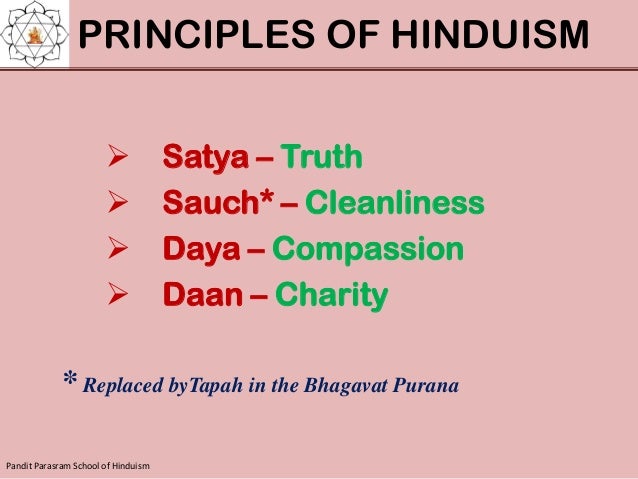
Hinduism - In the terminology used in the Hindu faith, the term 'Dana' is used to denore charity. It is one of the guiding principles of the Hindu faith. Giving 'daan' is considered to be very auspicious and an act of 'punya' (can be called a good deed). Since, a Hindu believes in the concept of 'life after death', charity of the act of giving also leads to him/her attaining nirvana (where the soul attains immortality and a person is freed from the cycle of birth and death). Now wonder, in major Hindu festivals, charity or giving gifts is considered to be an important act. For example, during Sankrant festival celebrated in the western and central parts of India, women perform the ritual of haldi-kumkum (applying turmeric and vermillion to other married women) and giving gifts since this period is considered auspicious to undertake charitabke work. Ethical and religious values of Hinduism advocate charity to enhance the quality of one's life as well as to purify one's live, The giver, through his/her good deed achieves respect, satisfaction, prestige and prosperity while the one who receives, usually the one who is needy gets some hope for life. It is through charity that good social behavious will be inculcated in the individual. Hindu religious texts, offer a philosophical perspective on the practice of charity. The Bhagvad Geeta and The Mahabharata emphasize the importance of charity - what is to be given and to whom it has to be given, with rationale for the same. For example,
“Give.
Give with faith. Do not give without faith. Give with sensitivity. Give with a
feeling of abundance. Give with right understanding.”
http://learningtogive.org/faithgroups/voices/phil_persp_of_hinduism.asp
Islam - In Islam, the term charity is called 'Zakat' and it literally means to purify. It means that when you offer a part of your wealth to the needy, you purify yourself. 'Zakat' is part of the obligations that a Muslim has to perform - these obligations are - belief in one God, belief in the Holy Quran, pilgrimage, fasting and charity (zakat). Zakat is a part of the wealth that one has to offer as part of one's identity of being a Muslim. In the ideal social system envisioned by Islam, based on welfare, money is not a thing to be stored. It is like the blood of a social system that has to keep moving, just as blood keeps circulating in our body to help it function efficiently. The concept of charity, is thus, an instrument to balance the system since no section of society should have the privilege of abundance. Everyone has the right to welfare. According to Islam, if a person has abundant wealth, then charity becomes obligatory for him/her. Islamic theology prescribes set rules about who can give charity and who can receive charity. Charity, for example, cannot be given to the immediate family because assisting the immediate family is obligatory on the individual. Zakat can be given to distant relatives who are not comparatively well off, to the poor and the needy, orphans, widows, slaves, prisoners, non-Muslims etc. In Islam, 'Zakat' is compulsory. Apart from the concept of Zakat, there are two other concepts of charity namely 'Sadaqah' or 'Khairat', which is not obligatory and can be given in any form. Charity in Islam, need not be given only in the material form. It can be given in deeds, words, acts of kindness and any other form which the person feels comfortable with. Example - helping financially, helping someone in studies, sharing knowledge, advising someone for his/her better or any other such act of social welfare.
Let those who give alms, both men and women, and lend unto Allah a goodly loan, it will be doubled for them, and theirs will be a rich reward.
Qur’an 57:18 http://learningtogive.org/faithgroups/voices/phil_in_islam.asp
Thus, it is not difficult to decipher that in both Hinduism and Islam, the concept of charity is presented in similar thoughts. It is considered to be serviec to God and believed to lead us on the path to God. In both religions, undertaking charitable work is believed to be an action of the highest order. Both religions also prescribe that doing charity must involve an inherent belief in goodness and compassion and should not be undertaken from the prism of elitism, authority and power. If one carries out charity under the air of superiority or pretension, then such an act of charity is worthless in the eyes of God. That a noble intention is must while involving oneself in charity is the idea forwarded in both the religions. The underlying meaning and purpose of charity, in Hinduism and Islam, is to rise above selfish thinking, individualistic way of life and perform the duty that one is bound to in one's role as a human being. Thus, charity is a pious act and leads to good - for the one who performs it and for the one who receives it. These simple, strikingly similar ideas permeate the philosophy and practice of Hinduism and Islam.
My desire has been to understand my own religion better. Apart from the Hindu faith, I have been intrigued by different facets of the Islamic faith. I was a member of an Islamic Library back in my college time, due to which I had the opportunity to explore Islam in a nuanced way. Here, I want to examine and derive similarities between the concept of 'charity' is Hinduism and Islam. A preliminary understanding of the concept drives home the fact that many aspects of what charity means to the followers of Hinduism and Islam are in fact very similar. I ackknowledge inputs from Salma Noureen, my friend from Pakistan who has helped me understand the Islamic take on charity better.
http://learningtogive.org/faithgroups/voices/phil_persp_of_hinduism.asp
The Holy Quran says,
Let those who give alms, both men and women, and lend unto Allah a goodly loan, it will be doubled for them, and theirs will be a rich reward.
Qur’an 57:18 http://learningtogive.org/faithgroups/voices/phil_in_islam.asp
Thus, it is not difficult to decipher that in both Hinduism and Islam, the concept of charity is presented in similar thoughts. It is considered to be serviec to God and believed to lead us on the path to God. In both religions, undertaking charitable work is believed to be an action of the highest order. Both religions also prescribe that doing charity must involve an inherent belief in goodness and compassion and should not be undertaken from the prism of elitism, authority and power. If one carries out charity under the air of superiority or pretension, then such an act of charity is worthless in the eyes of God. That a noble intention is must while involving oneself in charity is the idea forwarded in both the religions. The underlying meaning and purpose of charity, in Hinduism and Islam, is to rise above selfish thinking, individualistic way of life and perform the duty that one is bound to in one's role as a human being. Thus, charity is a pious act and leads to good - for the one who performs it and for the one who receives it. These simple, strikingly similar ideas permeate the philosophy and practice of Hinduism and Islam.
Labels:
Bhagvad Geeta,
charity,
daan,
Hinduism,
Holy Quran,
human being,
ideas,
Islam,
noble,
peace,
philosophy,
religion,
zakat
Thursday, 21 May 2015
Stories of my Grandmother
My grandmother was called Shrimati Indumati Potdar. We don't know her date of birth precisely, only that she was born in the month of Bhadrapad.
She was educated in Nagpur till she passed 9th std. At the age of 19, she married to my grandfather, Natwarlal Potdar, a telegram clerk and sent away to live at Chopda, a small village on the outskirts Jalgaon. Within 8 years, she had given birth to four children.
It was the year 1972, ten years after their marriage when my grandfather passed away due to a cardiac arrest. My grandmother was 29 years old, a mother of four and completely without any means to secure their future or her own.She was bereft of her husband and if that was not grief enough, tradition decreed that she observe a period of mourning for her husband by not stepping out of the house for one whole year. Trapped in the house, a young widow, with unsupportive and condescending in laws, who were barely getting by themselves.
Till she escaped. According to its policies, the Indian Post Office offered the post held by my grandfather to his nearest blood kin. With the support of some close friends, she made the decision to take up the job and packing her two youngest ones, she left for Nagpur.
Even then life was not easy. She had to take up her studies again and clear the 10th std exam to be eligible for the job. Being the only earning member in the family, she regularly sent funds back to Chopda as well. Eventually, she was able to bring the two elder children to live with her again. Educate them and arrange suitable marriages for them. Life went on.
She retired from the post office while I was young. We used to spend hours and hours watching TV. I have so many memories of lying beside her and listening to her tell stories. It used to be my favorite part of the day, going to Dadi's house.
I was ten years old when we left home to move to Mumbai and sixteen when she passed away. During the intervening six years we were barely connected by a bunch of motley phone calls and visits. Even then, our relationship was always that of a doting grandmother and a much beloved grandchild.
I never had a real conversation with her about how it had been. There are so many threads to the tapestry of her life I haven't explored. So many more perspectives to be unveiled.
All I have to know the strong, brave woman that my grandmother was, are a handful of stories. It is these stories that have had a very real and tangible effect on my life. My dad was brought up by her. Unconsciously it may have been, but he learned the value of self reliance and confidence from her. My parents have raised me in a similar culture of independence. They have taught me, by example, theirs and hers, to think for myself and stand by my decisions. It is a part of the legacy my grandmother bequeathed to her family.Her journey is an inspiration for me. Thinking of her gives me confidence and a glorious example to follow.
So when I sit down on women's day to think of all the brave, strong women who have touched my life, her name is top of the list. And will always be.
I believe in the power of storytelling for empowerment. I believe that stories can inspire change. I believe that I have so much more to learn from my grandmother and even though she isn't here to tell me herself, her stories will always be a part of who I am and who I hope to become.
I miss you, Dadi. And I love you.
Saturday, 16 May 2015
Unconventionally Married
I have been married for four years now. I married Tushar in the year 2011 and had just begin my PhD in Political Science from The Maharaja Sayajirao University at Baroda in Gujarat. It had been just two months that I'd started off with my thesis work and marriage was on the card. Indeed, I was very happy about beginning a new and lovely phase of life with many expectations and hopes. I believe this is how any Indian girl embraces marriage. She is full of dreams and hopes which she feels her partner and new family will fulfill. I was no different, but still different in quite a many ways. From the beginning of my doing a PhD, I was quite determined to devote my full time and energy to it, to focus on studying hard and doing my best. I am also not a very traditional and conventional person and in that sense I was quite determined to break barriers. Studying post marriage was full of challenges and it invited raised eyebrows, surprises and question marks when I told people that I was pursuing Ph.D. In that sense, the modern Indian society is quite funny. For women, both parents and society opine that everything should happen at the right age - studies, employment, marriage, children etc. Means you have to be ambitious, competent and yet not neglect duties and responsibilities towards your family. For young girls, like me, who are raised in egalitarian, modern and progressive families, this builds up too much pressure and is a hindrance to what one can accomplish. Life is not a smooth journey, and there will be hiccups and hindrances to it. Therefore, the pressures and expectations that society in India puts on women - especially those married and working are a stereotype in my view. Throughout my marriage I have worked to defy this stereotype.
Studying after marriage was a big deal for many whom I knew, and they advised me to devote more time to my new family and relationship. I realized that I could not forgo my thesis completely because I was committed to it, I loved doing research and I have never quite visualized myself as a home-maker (no offense meant to home-makers here). I was just not the one to sit at home and enjoy the domestic bliss that life offered me. Doing a PhD meant a lot of hard work, vague reading hours, long hours at the university because when you take a topic for in-depth study you totally devote yourself to it. In the course of time, I started attending coursework classes during the weekends, which meant that apart from being away on weekdays, I was away from home during the weekends as well. Most of time was in fact spent in the university premises than at home. I was sure that this wouldn't augur well with many in my family circle, my relatives and even my parents. To add to these problems, my husband's and my weekoffs were on different days - so while we enjoyed a holiday on Saturday, I worked in the university and while he worked on Sundays, I enjoyed Sunday afternoon siestas quite often. There were times when due to my research engagements, I was not able to make it to family functions, had to miss meeting friends and had to forego all the simple joys that a newly married girl hopes to partake in. These were tough times but with the support of my husband, who hardly cribbed about my packed schedule and my non-availability, even giving me space and freedom to devote long hours of study, I have managed to sail through. There were times when people ridiculed me and questioned me as to why I was working so hard. Some cautioned me about the consequences of not paying required attention to my marriage. I also became the subject of taunts when I refused to compromise my study timings to participate in functions and rituals. But I was determined and broke every stereotype that is associated with studies after marriage. I knew I was married to my PhD much earlier than I was to my husband! Thankfully, he understood. To everyone who now asks me how I managed to accomplish, my reply remains that though marriage is definitely the beginning of new things and dreams in life, but you need not sacrifice yourself and your old dreams for this new beginning. Adjust, but don not compromise and more importantly ... be yourself ... marriage was not meant to change you or bring to the world a new you ... a you who lives life according to the wishes of others.
Post my PhD completion, I took another drastic step. I moved to a different city for a job. That means, I am now living away from my husband and family for the sake of a career. Usually, it is the wife who moves with her husband in case he shifts to another town for professional growth. In my case, I have again broken the stereotype and have been the one to shift even as my husband continues with his work in our hometown. This means that we are now staying apart and people are quick to judge me as a woman who prioritized her career over family. That of course does not bother me because my family totally supports and understands me. However, as a woman, who has at every step defied the conventions of marriage, I am often asked questions like - "when will the two of you stay together?", "when will you think of starting a family?", "staying apart can be risky for marriage". There have been pressures, expectations and advice, many a times unsolicited and I have tried my best to turn deaf ears to it. Right now, I am enjoying this phase of staying as a college girl, managing things on my own and learning from the experience of venturing beyond my comfort zone because I never stayed away from home. This is a phase I will cherish. I will also, in my own little way, continue to rebel against established norms and structures, to be able to do what I really want to and continue to do that while being married! Because life gives us only one chance at living, and I remain confident of making the most of it.
Studying after marriage was a big deal for many whom I knew, and they advised me to devote more time to my new family and relationship. I realized that I could not forgo my thesis completely because I was committed to it, I loved doing research and I have never quite visualized myself as a home-maker (no offense meant to home-makers here). I was just not the one to sit at home and enjoy the domestic bliss that life offered me. Doing a PhD meant a lot of hard work, vague reading hours, long hours at the university because when you take a topic for in-depth study you totally devote yourself to it. In the course of time, I started attending coursework classes during the weekends, which meant that apart from being away on weekdays, I was away from home during the weekends as well. Most of time was in fact spent in the university premises than at home. I was sure that this wouldn't augur well with many in my family circle, my relatives and even my parents. To add to these problems, my husband's and my weekoffs were on different days - so while we enjoyed a holiday on Saturday, I worked in the university and while he worked on Sundays, I enjoyed Sunday afternoon siestas quite often. There were times when due to my research engagements, I was not able to make it to family functions, had to miss meeting friends and had to forego all the simple joys that a newly married girl hopes to partake in. These were tough times but with the support of my husband, who hardly cribbed about my packed schedule and my non-availability, even giving me space and freedom to devote long hours of study, I have managed to sail through. There were times when people ridiculed me and questioned me as to why I was working so hard. Some cautioned me about the consequences of not paying required attention to my marriage. I also became the subject of taunts when I refused to compromise my study timings to participate in functions and rituals. But I was determined and broke every stereotype that is associated with studies after marriage. I knew I was married to my PhD much earlier than I was to my husband! Thankfully, he understood. To everyone who now asks me how I managed to accomplish, my reply remains that though marriage is definitely the beginning of new things and dreams in life, but you need not sacrifice yourself and your old dreams for this new beginning. Adjust, but don not compromise and more importantly ... be yourself ... marriage was not meant to change you or bring to the world a new you ... a you who lives life according to the wishes of others.
Post my PhD completion, I took another drastic step. I moved to a different city for a job. That means, I am now living away from my husband and family for the sake of a career. Usually, it is the wife who moves with her husband in case he shifts to another town for professional growth. In my case, I have again broken the stereotype and have been the one to shift even as my husband continues with his work in our hometown. This means that we are now staying apart and people are quick to judge me as a woman who prioritized her career over family. That of course does not bother me because my family totally supports and understands me. However, as a woman, who has at every step defied the conventions of marriage, I am often asked questions like - "when will the two of you stay together?", "when will you think of starting a family?", "staying apart can be risky for marriage". There have been pressures, expectations and advice, many a times unsolicited and I have tried my best to turn deaf ears to it. Right now, I am enjoying this phase of staying as a college girl, managing things on my own and learning from the experience of venturing beyond my comfort zone because I never stayed away from home. This is a phase I will cherish. I will also, in my own little way, continue to rebel against established norms and structures, to be able to do what I really want to and continue to do that while being married! Because life gives us only one chance at living, and I remain confident of making the most of it.
Monday, 11 May 2015
Poem in Interfaith Dialogue in Indonesia: A Brief Review of Ulil's Easter Poem
Poem
as an art form is very powerful to deliver ideas and convince people.
Its intriguing chosen words, beautifully framed lines and deeply
thought reflection are some main attraction points of a poem. Thus, a
poem may tickle mind, as well as grab heart. In fact, poem is often
used either intentionally or unintentionally to contribute to social
change expected. In the interfaith dialogue context, it is no
exception.
While
interfaith dialogue advocates may use poem to deliver her/his
aspirations, some philosophers, religious figures, spiritualists have
been using poems to reflect on their conviction and/or inner journey.
Even, as a matter of fact, several (parts) of holy scriptures of
different faiths are written in poetic styles, resembling a poem. It
is a personal deepest struggle and search toward life, love, human,
nature and even the Supreme Being that spur the expression through a
poem. Thus, frequently a poem is more a personal one, rather that
being used to aim collective groups. Nevertheless, a poem, later, may
be used for advocacy by the writer her/himself or others.
One
of an interesting poem that is about interfaith issue is written by
an Indonesian Muslim scholar, Ulil Abshar Abdalla. His personal
background is undoubtedly strong Islam tradition. His thoughts on
religions are seen very progressive and liberal,1 that
invites support and admiration as well as opposition and criticism. I
would like to introduce one of his poems written about Easter and
Jesus.2
Easter Poem
By Ulil Abshar-Abdalla
He who collapsed,
on the holy virgin’s lap,
resurrected after three days,
against death.
He who was weak,
revived an impossible expectation.
He who is the weakest,
His body bears our sufferings.
***************************
He who is the weakest,
His suffering conquers kings of the
world.
He who falled in love with morning,
after being stoned painfully.
He who looked up to the holy sky,
swathed in scarlet red cloth: Love
me, please!
****************************************
They argue
about who died on the wooden cross.
I’m not interested in the debate
of theologians.
It is the pouring blood which
strongly touches me.
When I boast my faith,
The painful body lying on that
wood,
keeps reminding me:
In fact, He also suffers, with the
insulted.
************************************
My Mohammed, your Jesus, your
Buddha, your Krisna, your Confucius,
they all are my teachers,
who teach me about the vastness of
the world, and love.
*************************************************
Your disease, O believers:
You easily become complacent,
arrogant,
boasting yourself like a peacock.
You are eager to judge!
*********************
The body with the pouring blood on
that wood,
is not a peacock.
He teaches us, about love,
for those who are misled and
insulted.
**********************************
Suffering sometimes teaches you
about a humble faith.
The letters in the scriptures,
often make you feel you are the
only holiest person.
**********************************************
Yes, your Jesus is also my Jesus,
He has saved me from a faith,
which is arrogant and too proud.
He makes me love the insulted!
****************************
(Translated by S.Belen)
This
poem is powerful, because not only is written by non-Christian, but
also brings the humane side as well as the understanding of different
perspective. The suffering of Jesus as believed by Christian is
vividly and emotionally described, as if a Christian is reflecting on
the Easter meaning. Yet, Ulil connects it with his identity or belief
as a Muslim. Yet, he expands to other (figures) of faith and tries to
find the common ground for all. Humility and love are some of them,
while at the same he criticises act of arrogance and proud. Thus, it
is definitely a result of a deep process of an interfaith dialogue, a
true passover. Yet, whether this poem is effective or not, it is
quite difficult to say. Whereas many people enjoy and possibly get
some enlightenment, some become more defensive and reject it totally.
The poem itself once went viral in the internet in Indonesia. It
usually goes viral again during Easter period. Nevertheless, a poem
indeed is a refined form of human expression, that often gives softer
but sharper approach to an issue. This poem, then, I will say is
pretty valuable.
1
He is also known for his activism in a group called “Liberal
Islam Network.”
2
For the orginal source, see:
https://sbelen.wordpress.com/2011/04/28/easter-poem-by-ulil-abshar-abdalla-an-islamic-scholar-activist/.
Tuesday, 5 May 2015
Malala Gives Me Hope
Nobel Peace Prize winner Malala Yousafzai's work is not unknown to the world. She stands out as an inspiration to deprived, oppressed and marginalized populations with her sheer grit, determination and guts demonstrated by her in the wake of an attack on her by the Pakistani Taliban because she was defying their diktat of disallowing girls from the Swat valley in Pakistan to attend school. The youngest winner of the Nobel Peace Prize, Malala bravely survived a horrendous and brutal attack to continue with her relentless advocacy for empowering young girls through the medium of education. My interface with her work began when I was gifted her autobiography (I am Malala: The Girl Who Stood Up for Education and was Shot by the Taliban (Weidenfeld & Nicolson, 2013) by my brother.
http://www.womensweb.in/2015/02/malalas-autobiography-book-review/. It proved to be an inspiring read. It also sent shivers down my spine as I read about her and her father's struggle to educate young boys and girls in Pakistan and the opposition that they encountered in their endeavours. This line of hers remains etched in my mind and over time me and my family have come to admire this young and little but gutsy and spirited lady from Pakistan - "One Child, One Teacher, One Pen And One Book Can Change The World".
In Nepal last year, for SIT's (School of International Training) CONTACT South Asia program, I heard Malala speak from the platform of the Nobel Peace Prize ceremony. Once again she inspired me with her very articulate ideas about how education can transform the world. It was a delightful moment for Indians and Pakistanis sharing the forum to hear to Kailash Satyarthi, an Indian and Malala, a Pakistani share the Nobel peace prize together. This came as an affirmation of the fact that if these two enemy countries joined hands, they could conquer the world. The purpose that drove Satyarthi and Malala was also very similar ... upliftment and betterment of children, the hope for this world.
And then to give me more inspiration, came a song on Malala which got me glued the very first time I listened to it on YouTube. The song is titled "Malala gives me Hope" and is a tribute by a music band in Pakistan 'Laal' to the courage shown by Malala. This song for me gives the perfect message of peace and combines the power of music and feminism to effectively demonstrate what one young lady full of courage can do to change this world in her own way. Just listen to this song and you will know about Malala's story, how she faced the extremist elements of Taliban, how she continued to fight for the girl child's rights despite the threats to her life and the way she came to be known as Pakistan's brave voice who did not fear those who were manipulating religion to meet their selfish ends. The song is spirited, full of beats, amazing lyrics which convey the essence of Malala's struggle and its impact in Pakistan and has the right, upbeat mood to make you listen to it again and again. Once I'd heard this song, I just could not stop listening to it because to me it was a wonderful and brilliantly done job of using music as a tool to communicate change and peace. Music and words associated with it can be a tool for social change and the song by Laal just proves this right. It is a significant way of conducting advocacy over an issue. The song was recorded in English and that remains my only grouse, Because the song should reach all corners of Pakistan and South Asia, and English is a language that most are not familiar with in the sub-continent. So, recording the song in various native languages like Hindi, Urdu, Punjabi, Sindhi can be helpful. Albeit, the song successfully weaves in a narrative of Malala's life story and this is the message that should reach out to audiences. The song was released in 2013 and features lead guitarist and vocalist Taimur Rahman and Haider Rahman on flute (http://tribune.com.pk/story/578644/malala-inspires-documentary-song-at-home-and-abroad/). It is gratifying to hear this song because it is just near to perfect in symbolizing Malala's struggle and rightly creates an atmosphere that denounces war and extremism. It has a story like feel to it. It gives hope and does not shy away of directly confronting issues that face Pakistan in modern times.
Music in any language can be the most impactful medium of promoting peace because music has a universal language ... a language that nobody really knows yet understands. Music remains an ageless, timeless and immortal medium that people can easily connect with and relate to. I have realized this repeatedly, especially when I listen to musicians like Yanni who with their soulful music have managed to sway audiences irrespective of gender, nationality and religion. The power that music possesses can comfortably transcend man made barriers. Even as an Indian, listening to this song filled me with a feeling of peace, tranquility and inspiration, even making me dance to its tune. It filled me with more pride and respect for Malala and her mission. Truly music can connect even enemies and bring them to the same page. I am sure, after listening to this song you all will share my thoughts on the power of music to promote peace.
http://www.womensweb.in/2015/02/malalas-autobiography-book-review/. It proved to be an inspiring read. It also sent shivers down my spine as I read about her and her father's struggle to educate young boys and girls in Pakistan and the opposition that they encountered in their endeavours. This line of hers remains etched in my mind and over time me and my family have come to admire this young and little but gutsy and spirited lady from Pakistan - "One Child, One Teacher, One Pen And One Book Can Change The World".
In Nepal last year, for SIT's (School of International Training) CONTACT South Asia program, I heard Malala speak from the platform of the Nobel Peace Prize ceremony. Once again she inspired me with her very articulate ideas about how education can transform the world. It was a delightful moment for Indians and Pakistanis sharing the forum to hear to Kailash Satyarthi, an Indian and Malala, a Pakistani share the Nobel peace prize together. This came as an affirmation of the fact that if these two enemy countries joined hands, they could conquer the world. The purpose that drove Satyarthi and Malala was also very similar ... upliftment and betterment of children, the hope for this world.
And then to give me more inspiration, came a song on Malala which got me glued the very first time I listened to it on YouTube. The song is titled "Malala gives me Hope" and is a tribute by a music band in Pakistan 'Laal' to the courage shown by Malala. This song for me gives the perfect message of peace and combines the power of music and feminism to effectively demonstrate what one young lady full of courage can do to change this world in her own way. Just listen to this song and you will know about Malala's story, how she faced the extremist elements of Taliban, how she continued to fight for the girl child's rights despite the threats to her life and the way she came to be known as Pakistan's brave voice who did not fear those who were manipulating religion to meet their selfish ends. The song is spirited, full of beats, amazing lyrics which convey the essence of Malala's struggle and its impact in Pakistan and has the right, upbeat mood to make you listen to it again and again. Once I'd heard this song, I just could not stop listening to it because to me it was a wonderful and brilliantly done job of using music as a tool to communicate change and peace. Music and words associated with it can be a tool for social change and the song by Laal just proves this right. It is a significant way of conducting advocacy over an issue. The song was recorded in English and that remains my only grouse, Because the song should reach all corners of Pakistan and South Asia, and English is a language that most are not familiar with in the sub-continent. So, recording the song in various native languages like Hindi, Urdu, Punjabi, Sindhi can be helpful. Albeit, the song successfully weaves in a narrative of Malala's life story and this is the message that should reach out to audiences. The song was released in 2013 and features lead guitarist and vocalist Taimur Rahman and Haider Rahman on flute (http://tribune.com.pk/story/578644/malala-inspires-documentary-song-at-home-and-abroad/). It is gratifying to hear this song because it is just near to perfect in symbolizing Malala's struggle and rightly creates an atmosphere that denounces war and extremism. It has a story like feel to it. It gives hope and does not shy away of directly confronting issues that face Pakistan in modern times.
Sample these lines
Well the Taliban they run the country
From the north of Wazirstan
They make a few of their people happy
They don't care about the rest of them
They have supporter in higher places
Who turn their heads to the city sun
And they given them the fancy money
To tempt anyone who come
In its praise of Malala, the song also exposes the various issues that plague Pakistan and how the government in that country is turning a blind eye to these. In such a despondent scenario, there is still hope, as the song conveys, in the form of Malala who is the shining light for Pakistan and its young men and women. The ultimate form of 'hope' is Malala because she dared to raise her voice against those who were hell bent upon denying rights and freedom to young girls in Pakistan, therefore, robbing Pakistan of its bright future. The theme of hope runs through the song and through the last lines this hope for peace is kept alive when the singer hums -
Can't you see that the tide is turning
Don't make me wait till the morning comes
Saturday, 2 May 2015
Gus Dur and His Jokes
A person's story that has inspired me is Gus Dur's story. Gus
Dur, who is also known as KH Abdurrahman Wahid, is a great Muslim
leader of Indonesia. He comes from a strong Islam tradition. His
grandfather is the founder of Nahdlatul Ulama, the biggest Muslim
organization in Indonesia. His father is also a great ulema, who once
became a minister of religion. Gus Dur himself underwent intensive
religious education in Indonesia and abroad. Later, he held the
highest executive leadership position at the organization, his
grandfather founded. During a political transition, after Suharto
regime's downfall, Gus Dur was successfully elected as the president
of Republic Indonesia. Despite of all his successes, he faced several
bitter failures, including being dethroned from his president
position in 2001. He was also considered being too controversial. His
controversy often raised strong resistance from religious groups. He
was marked as being liberal. Yet, he argues that his stand is
actually a representation of “friendly Islam, not angry Islam”
(in Indonesian: “Islam yang ramah, bukan yang marah”).
Even, he is a fervent supporter to protect minority rights. This idea
is shown in many actions and statements he made. Interestingly, he
used many jokes to tell a message. Some of them are following.
---
At the gate of heaven, there was a debate among three religious leaders and an angel who guards the gate. Those three religious leaders, a monk, an imam and a pastor, thought oneself should have entered heaven first, as their service and piety during their life. Suddenly, a young guy who looks dirty and smelly came. The angel checked its book for a while, and then let the young guy enter. Surely, those three religious leaders protested harshly against this unfair treatment.
“Who was he?” asked the monk.
“He was a public bus driver?” answered the angel.
“A driver? So what has he done?” asked the pastor.
“He often drove carelessly because he got drunk.”
“Oh unbelievable! He often got drunk and he gets privilege to enter heaven, even earlier than us?!”
the imam and the other two were extremely upset.
“You should understand. Because of him, many people who rode with him, pray to God so sincerely. At the same time, many people got so sleepy while you deliver your sermon that even they do not pray anymore.” the angel explained.
---
“Which religious believer is the closest to God?” asked Gus Dur.
“Hindu people, they are pretty close to God. They say “Ohm”1 to open their prayer. Christian even is much closer to God. They call God “Father”.”
“Then, do you know who is the furthest?”
“Muslim.”
“They need a loudspeaker to call God.”2
While I am fully aware that not everyone will support or agree with such kind of humor, I still see those humorous stories told by Gus Dur powerful. They indeed influence my perspective and impressions not only about Gus Dur and Muslim, but also about human, society, life and even God. Gus Dur, as a religious leader, civil society leader, and state leader, has eloquently mastered skills to tell jokes and stories. Therefore he is considered as an influential figure by many in Indonesia (He also gets acknowledgment and high appreciation from international public). The stories may be (a bit) sarcastic. Yet, as Oscar Wilde said, “Sarcasm is the lowest form of wit, but the highest form of intelligence.”
1 A similar pronunciation, “Om” in Indonesia is a common word used to call “Uncle.” It actually comes from the Dutch word, which has the same meaning.
2 In Indonesia, almost every mosque is equipped with loudspeaker that can make call for prayer (adhan) or prayer be heard to as many people as possible outside the mosque building. 3 In fact, some religious groups were offended.
---
At the gate of heaven, there was a debate among three religious leaders and an angel who guards the gate. Those three religious leaders, a monk, an imam and a pastor, thought oneself should have entered heaven first, as their service and piety during their life. Suddenly, a young guy who looks dirty and smelly came. The angel checked its book for a while, and then let the young guy enter. Surely, those three religious leaders protested harshly against this unfair treatment.
“Who was he?” asked the monk.
“He was a public bus driver?” answered the angel.
“A driver? So what has he done?” asked the pastor.
“He often drove carelessly because he got drunk.”
“Oh unbelievable! He often got drunk and he gets privilege to enter heaven, even earlier than us?!”
the imam and the other two were extremely upset.
“You should understand. Because of him, many people who rode with him, pray to God so sincerely. At the same time, many people got so sleepy while you deliver your sermon that even they do not pray anymore.” the angel explained.
---
“Which religious believer is the closest to God?” asked Gus Dur.
“Hindu people, they are pretty close to God. They say “Ohm”1 to open their prayer. Christian even is much closer to God. They call God “Father”.”
“Then, do you know who is the furthest?”
“Muslim.”
“They need a loudspeaker to call God.”2
While I am fully aware that not everyone will support or agree with such kind of humor, I still see those humorous stories told by Gus Dur powerful. They indeed influence my perspective and impressions not only about Gus Dur and Muslim, but also about human, society, life and even God. Gus Dur, as a religious leader, civil society leader, and state leader, has eloquently mastered skills to tell jokes and stories. Therefore he is considered as an influential figure by many in Indonesia (He also gets acknowledgment and high appreciation from international public). The stories may be (a bit) sarcastic. Yet, as Oscar Wilde said, “Sarcasm is the lowest form of wit, but the highest form of intelligence.”
1 A similar pronunciation, “Om” in Indonesia is a common word used to call “Uncle.” It actually comes from the Dutch word, which has the same meaning.
2 In Indonesia, almost every mosque is equipped with loudspeaker that can make call for prayer (adhan) or prayer be heard to as many people as possible outside the mosque building. 3 In fact, some religious groups were offended.
Monday, 27 April 2015
The road less traveled
I have never shared this story. That is why it becomes important to tell it now. I experience no hesitation in recounting this very personal account to a bunch of supposed strangers because all of you in Team Hope, by now, for me, are close friends. In fact, it is like a catharsis of emotions for me since this story lies deep inside me for a long time. This is my story! And this is my sister's story. My sister is special for me. And many have asked why? Because sisters are always special! Mine is more special because she has been an adopted child for my parents. Our bond may not be a real bond in the sense of being of the same blood, but it is a bond that I will cherish and preserve for times to come.
The story is thus ... I must have been in Class 7 or 8 when my mother expressed her desire to adopt a girl child. She had this desire for having a second child but somehow this was left unfulfilled. She wanted to adopt a girl. For someone, as young as I was in that age, this was shocking. I could not fathom why my mother wanted to do so. She had me and I had her. I had always been a single child, had enjoyed the privileges and attentions of being one. I was extremely uncomfortable to the idea of sharing my own space, my belongings, and most importantly my parents' love with an outsider, a stranger. She was not one of my own. How on earth could I accept her? I remember turning extremely defiant and not supporting my mother in her decision. I knew she would be hurt. But then I had become selfish for I could not imagine this intrusion in a life that had been so fulfilling and well-guarded. I kept thinking about how I would face my friends, how life would change, how would I face my friends. What would I tell them? That she is my sister and what would they think about a sister suddenly cropping up for me when they all knew I was the only child. I reclined into a self-created space of denial, insecurity, jealousy and my mother was well aware of this. Today, when I think about all of this, I am pained at the fact that I hurt her so much. But then I was myself a child then, bereft of an understanding of complicated issues like bringing an adopted girl child into one's home.
Gradually, I gave in! Sort of succumbed and surrendered to the wishes of my other. I welcomed this shy, little, reclusive and soft girl called Rohini into our home. Initially, it was a bit difficult to adjust to the presence of another person in my life. Little things that ideally should not have mattered started affecting me ... like sharing space, things and most importantly the love of my parents, for whom I was the center of attraction till she came. With time, I began to enjoy Rohini's presence which made me feel like I now had the sister I always wanted. I began spending more time with her, talking to her and she also started to open up. She came from a troubled and deprived background and craved for love. I could sense that she was happy to be with us even though she spoke really less. She still is a lady of few words. In all these years, she has grown to be my best friend. I care for her like any sister would and today we can talk for hours together, we rely on each other and share every little secret. We are like partners in crime! I have seen her transform from a shy, silent, introvert person to a confident, outspoken, brave young girl whom I feel proud to call my sister. There are many who express surprise when they learn that we are not real sisters. To them, I say, she is a special child for the family. She brought to us what money, luxury and comforts of all manner could not have brought. She brought for us profound gratitude, love, warmth, care, affection and the feeling of belonging. Only a special person can do this. One who is God's most loved child. She is indeed and I keep telling her that she is special to me. The two of us standing together, it will be difficult for anyone to make out that we are not real siblings. But it can't be as real as this ... our bond will only get closer and stronger.
The time when my parents decided to go ahead with this unconventional decision to this day when I see a smile on their faces when they see us together, I realize that it must have been equally difficult for them to face constant questions from family, society, relatives, acquaintances with regard to the step that they took. There must have been people who would have strongly advised them against this step, a few must have discouraged. They also must have faced taunts about wanting to adopt a girl child and not a boy. I cannot stretch my imagination as to how, given the time and the traditional set up that they came from, they took this bold step because it is what their heart told them to follow. How difficult would it have been for them to convince me, to answer my questions, to overcome the guilt that I put them through, even so unknowingly. It must have been a tough call. Yet, today they stand out as winners, as proud parents of two daughters. In the process, they never burdened either me or my sister with their expectations, while giving complete freedom to us to travel the path we chose for ourselves. They stand besides us in thick and thin, and somewhere, even as a married woman now, I know they will stand by me whenever I call out to them. To me, theirs is a story of inspiration for they took the road less traveled.
![]() |
| My Family |
Gradually, I gave in! Sort of succumbed and surrendered to the wishes of my other. I welcomed this shy, little, reclusive and soft girl called Rohini into our home. Initially, it was a bit difficult to adjust to the presence of another person in my life. Little things that ideally should not have mattered started affecting me ... like sharing space, things and most importantly the love of my parents, for whom I was the center of attraction till she came. With time, I began to enjoy Rohini's presence which made me feel like I now had the sister I always wanted. I began spending more time with her, talking to her and she also started to open up. She came from a troubled and deprived background and craved for love. I could sense that she was happy to be with us even though she spoke really less. She still is a lady of few words. In all these years, she has grown to be my best friend. I care for her like any sister would and today we can talk for hours together, we rely on each other and share every little secret. We are like partners in crime! I have seen her transform from a shy, silent, introvert person to a confident, outspoken, brave young girl whom I feel proud to call my sister. There are many who express surprise when they learn that we are not real sisters. To them, I say, she is a special child for the family. She brought to us what money, luxury and comforts of all manner could not have brought. She brought for us profound gratitude, love, warmth, care, affection and the feeling of belonging. Only a special person can do this. One who is God's most loved child. She is indeed and I keep telling her that she is special to me. The two of us standing together, it will be difficult for anyone to make out that we are not real siblings. But it can't be as real as this ... our bond will only get closer and stronger.
The time when my parents decided to go ahead with this unconventional decision to this day when I see a smile on their faces when they see us together, I realize that it must have been equally difficult for them to face constant questions from family, society, relatives, acquaintances with regard to the step that they took. There must have been people who would have strongly advised them against this step, a few must have discouraged. They also must have faced taunts about wanting to adopt a girl child and not a boy. I cannot stretch my imagination as to how, given the time and the traditional set up that they came from, they took this bold step because it is what their heart told them to follow. How difficult would it have been for them to convince me, to answer my questions, to overcome the guilt that I put them through, even so unknowingly. It must have been a tough call. Yet, today they stand out as winners, as proud parents of two daughters. In the process, they never burdened either me or my sister with their expectations, while giving complete freedom to us to travel the path we chose for ourselves. They stand besides us in thick and thin, and somewhere, even as a married woman now, I know they will stand by me whenever I call out to them. To me, theirs is a story of inspiration for they took the road less traveled.
Sunday, 26 April 2015
Nationalism and Extreme Patriotism: A Threat to Global Peace
"Nationalism is an infantile disease. It is the measles of mankind."~ Albert Einstein
An American patriot is rumored to have once said, "My country, right or wrong, I stand by it."
While it is arguably a very noble trait to stand up for and support your own country, is deriding another country the way to go about doing it? Was Patriotism really meant to be what we see nowadays? Or has it now been converted into a twisted self-centered propaganda mechanism? Is Nationalism merely is a belief, creed or political ideology that involves an individual identifying with, or becoming attached to, one's nation? Or is it an extreme form of patriotism marked by a feeling of unjustified superiority over other countries?
In the current modern World, Patriotism to the masses is about supporting their country, even when the country is in the wrong. It is about abusing and their "enemies", even when they are suffering. It is about considering themselves morally superior. Why? Just cause it is THEIR country.
The current scenario in Syria provides a proper example. The continuous US-led bombing has killed hundreds of innocents, who were already suffering at the hands of the ISIS. The beautiful and ancient cities have been reduced to rubble. And yet major public opinion in the US is with the Government carrying out more air strikes. Why? Cause the Government considers the Syrian Government and ISIS as enemies and it is the duty of US citizens to support their Governments wars against the enemies. Innocent lives are merely collateral damage for them. Very often while fighting against something wrong, unknowingly we become what we were fighting against. In India, has Patriotism been reduced to merely supporting our Cricket team during the World Cup and insulting countries like Pakistan and Bangladesh whenever we get a chance?
For an Indian to be patriotic, does he really need to abuse Pakistan and hate Pakistanis? Do we really need to treat people Bangladesh, Nepal, and Bhutan as if they are below us? The moment we say that we are better than them cause this is my country and I will support it to the death, we are throwing logic and reasoning out of the window. And that is the first step to extremism. History is the proof that whenever someone considered their country superior than the others around them, it did not end well for the entire world. Be it Hitler, Napoleon or the English East India Company.
I know a lot of those reading this will argue that all other countries are guilty of doing the same, and they are right! Every country does this while preaching of world peace on the other hand. For the world to be at Peace no country should consider itself morally superior, cause we are all suffering together.
The reason there is so much hatred in our sub-continent is that from the very young age children in India are told that we are better than Pakistan. Similarly, children in Pakistan are manipulated the same way. They are taught to blame India for every minor fault. We are taught to ridicule them and taunt them for everything. In general opinion of India, Pakistan is a barren wasteland of people who only worship God and get trained as a terrorist. Similarly, people in Pakistan might consider India as a bully big brother which wants it destroyed. What either side keep forgetting is that both Pakistan and India are a beautiful part of the very same land. It was all part of the same country once, and the very same world. We ridicule Bangladesh when immigrants cross over to India and refer to them as refugees and consider them as people living on India's mercy. We criticize Sri Lanka, even when Indian fishermen get caught after violating International Maritime Laws. Why? Just cause we should support our country, even when they are wrong? What we do not understand, is for one to be a proud Indian, hating Pakistan is NOT an essential criterion. Just as to be a proud Hindu, you need NOT hate Muslims or Christians and vice versa. You can love your country. Doesn't mean you have to hate others.

There is also a huge difference in being an anti-national and ant-Government. Everyone who speaks out against the Government is NOT a terrorist. History is proof that those who oppose their Governments may also be the true patriots. It is the duty of a real patriot, to not only love its country but to also stand up and speak when its Country is doing something wrong.
Extremist Patriotism is to blame behind all hindered peace processes. It is our belief that by insulting and abusing another country, we are actually showing our Patriotism. That does NOT show our Patriotism. It merely incites hatred towards the other Countries and encourages an irrational sense of superiority. Only through honest dialogue can peace be achieved.
I am not against being proud of our culture and heritage and rich history. I am against anyone considering that their culture and heritage is better than someone else's.
A major problem with India-Pakistan relations has always been the fact that both sides care too much about what was their past and too little about what we can achieve together in the future.
Wednesday, 22 April 2015
Dialogue as a Key Driver of Peace
One
of the key drivers of peace is DIALOGUE. So, what is a dialogue? Of
course, etymologically, dialogue can be in contrast against
monologue, which a one-way of communication. Thus, 'dialogue' can be
defined as a two-way of communication of two more parties, in which
listening and speaking or receiving and giving activities are
well-balancedly put. Furthermore, it implies other qualities such as
equality, understanding, empathy, patience, etc.
Let's
see a more sophisticated and enlightening definitions by some
experts.
“A
dialogue is very important. It is a form of communication in which
question and answer continue till a question is left without an
answer. Thus the question is suspended between the two persons
involved in this answer and question. It is like a bud with untouched
blossoms . . . If the question is left totally untouched by thought,
it then has its own answer because the questioner and answerer, as
persons, have disappeared. This is a form of dialogue in which
investigation reaches a certain point of intensity and depth, which
then has a quality that thought can never reach.”
- Jiddu Krishnamurti
"Critical and liberating dialogue, which presupposes action, must be carried on with the oppressed at whatever the stage of their struggle for liberation." - Paulo Freire
“No
peace among the nations
without peace among the religions.
No peace among the religions
without dialogue between the religions
No dialogue between the religions
without investigation of the foundation of the religions.”
- Hans Küng
without peace among the religions.
No peace among the religions
without dialogue between the religions
No dialogue between the religions
without investigation of the foundation of the religions.”
- Hans Küng
“Our
ability to offer empathy can allow us to stay vulnerable, defuse
potential violence, help us hear the word 'no' without taking it as a
rejection, revive lifeless conversation, and even hear the feelings
and needs expressed through silence.” - Marshall B. Rosenberg
Those are some of my favorite quotes on dialogue. From a more contemporary figures, the quotes are also very interesting.
“I watch silent movies on mute. But only for the dialogue.”
- Jarod Kintz, A Zebra is the Piano of the Animal Kingdom
“Perception
can be one-sided or variant: "Glass half empty or half full."
There usually is more than one way of perceiving. Thoroughly check
your inner dialogue.”
- T.F. Hodge, From Within I Rise: Spiritual Triumph Over Death and Conscious Encounters with "The Divine Presence"
Dialogue
itself is a the heart of my work, related to build peace, transform
conflict and establish a sustainable intercultural & interfaith
dialogue. Then, how dialogue can be achieved through my work. While
dialogue itself can be perceived as a goal, it is also a tool to
reach a bigger mission. Some qualities of a (good) dialogue,
mentioned above, definitely the prerequisites needed. Equality,
understanding, empathy, patience, compassion, honesty, and openness
are some of those. Indeed, there are also some more technical
qualities, such as active listening skills. However, I believe a
dialogue does not only a conversation with others. Rather than that,
a dialogue is a more continuous conversation with one self. The
question, then, do we have a dialogue with our inner self?
Share
your own story (OR) share an inspirational person’s story that has
changed your way of thinking or has inspired you.
Subscribe to:
Comments (Atom)