Showing posts with label peace. Show all posts

Monday, 8 June 2015

Choosing Peace over Violence

Session 8 ... we are now closer to the end. But for me, this will be a journey to remember, a journey to cherish!

This was by far the most interesting session in #GlobalConversations. Now wonder we overshot time and continued to discuss until our enthused spirits permitted us. While the focus of the session was on violence and its varying manifestations, the primary point of debate was a question on whether 'men too are victims of patriarchy?" Not surprisingly, we agreed to disagree. Precisely, why we are conversing.

In whatever limited understanding I have developed about peace, it has been reiterated that one cannot understand the dynamics of peace without delving deeper into the phenomena of 'conflict' and 'violence'. The dichotomous tendencies associated with the two terms ensure that while we embrace peace, we detest violence. While there are negative, undesirable values associated with the philosophy and actions that condone violence, I get uncomfortable when I am told that total eradication of violence is what human race should aim for. Apart from being an ideal state of affairs, what one needs to question is whether this is actually desirable. Violence definitely does have disastrous effects as it leads to loss of life and property, nature and its creation. But violence is essential for the progress of human race. It has over times led to evolution of the human kind. The existence of unjust systems and practices cannot be denied. It is a reality that one encounters each day. At times, when there are few options left, it is violence that has helped to overturn these structures and ensure that liberty, equality and rights remain firm. Violence must not be examined from the spectrum of 'good' or 'bad', since these water-tight compartments aren't really going to help us to attain peace. At times, violence is good, it is the only choice that one is left with, and its eventual consequences turn out to be positive and life-changing. We have occupied a cycle of evolution in which we are bound to confront ills, wrongs. That is where human beings face a challenge. They are presented with a choice - to pick either violent means, or to choose peaceful ones. I believe it is unfair to judge which of these means is more forthright and moral, since the context and circumstances of putting this to use is inevitable when explaining our choice.

When a woman or a man faces domestic abuse, she/he may choose to react violently owing to several factors such as anger, frustration, fear. In cases of sexual harassment on streets, what choice is one left with, if one is overpowered by the assaulter. Thus, there are no clear boundaries to be drawn as the lines of distinction disappear when one is left to make a choice. This choice is better left to the individual and her/his circumstances. I have seen women suffering violence and then emerging as victorious in life. Facing violence at the hands of their near and dear ones, they realized that they did not deserve this. Violence provided the much needed impetus to take a decision that led to self-worth and dignity. In such cases, violence provided the push towards a peaceful and dignified life. This obviously does not mean that violence has to be endorsed. It should always be avoided and be considered as a last resort. Don't we do that in our everyday negotiations with life? Faced with any problem, we make attempts to resolve it with peace and resilience, failing which people have a tendency to take to violence.

For me, choosing peace over violence has not come naturally. In a previous post, written on this very blog, I have been candid to admit that peaceful behaviour is indeed demanding and requires much moral courage. This then cannot be an excuse to resort to violence. In everyday interactions with people who come from a platform of different world views, I have often experienced anger and frustration which has led me to 'thinking violently'. I have then consciously chosen to control my emotions, talk to myself, reassuring my own self that a disagreement is fine, and even if the person remains totally on the wrong, I have told myself to continue to be friendly and move on. Nevertheless, this has at times led to immense frustration wherein my brain tells me that I should resort to some kind of violence, whereas my heart tells me to adopt a more peaceful approach.

What works best for me is when I turn violent (I am quite sure about not hitting any one, but verbal violence is a possibility), I'd like to shut myself off from everyone around me, isolate myself, move to a corner, give myself some breathing space and talk ... assure that things are fine, or will eventually be fine. In another conscious attempt, I try to think about the disastrous consequences of what will happen if a violent reaction were to emanate from my end. It would aggravate an already spoiled situation and in turn affect relationships. One way of consciously choosing peace over any kind of violence is to introspect past actions and see and decide for oneself, the kind of consequences violence leads to. That will help make a sane/rationale choice.

I want to end with a mundane example. These days road rage is a common occurrence in India. You often can see people getting off their vehicles to trash the other person, either physically or verbally, arguing and counter-arguing over who was in the right lane and who wasn't, who was driving properly and who wasn't. This often has led to cases of road rage, with people ready to kill the other person for a perceived fault. While driving, I realized that I was not indulging in physical violence but was emitting a lot of negative emotions, energy directed towards people I thought were bad at driving and lacked basic traffic sense. At times, stopping in the middle of the road, I have abused the offender to attain a level of gratification, only to be consumed with hatred for the next hour. This wasn't helping me of course. I then decided to switch gears, choosing to not react at all or react with a smile. These days, I don't rue that people have a poor sense of traffic. Instead, I smile at them and let them proceed first understanding that are experiencing a greater sense of hurry and urgency than I am. At the end of the day, on the roads, with my vehicle, I feel peaceful and happier as I drive my way to my destination.   

Tuesday, 2 June 2015

Forgiving is a difficult choice

For me, it has never been quite easy to forgive. Forgive anybody who has hurt me. The hurt has, in most cases, stayed on with me since my memory is quite sharp and I usually tend to remember situations and encounters of injustice that I have faced in life. I must admit, that to forgive one has to be brave, full of strength and compassion and willing to look beyond what I call the situation that one is faced with. Reconciling forgiveness and justice is not as easy task for anybody. To forgive, one has to be sure of the fact that justice has been delivered and now one can move ahead in life. More often than not, we tend to be too caught up in situations, engulfed by anguish and hurt that consumes us more than the person whom we pronounce guilty of committing the act of injustice.

I am yet to arrive at a situation in life where justice and forgiveness have crossed roads, trying to meet up. One or the other has always eluded me. If I am able to forgive, a sense of injustice creeps on within me and I begin to question the validity of forgiving the person who hurt me. A sense of justice renders me a proud and arrogant person who then assumes a mask of victory, while believing that when I have got what I deserved, forgiving the one who did wrong is immaterial. Trying to thus bring justice and forgiveness on the same platform is an arduous task. There have been instances of friendships going sour for me. The feeling of having done too much, having invested so much of my energy in a relationship without getting much in return except bitterness and an ungrateful attitude. At times, I have forgiven people for the sake of it. At times, it has been for letting ill-feelings drown because I was harbouring them at the cost of my own health and peace of mind. There are times when I have forgiven just to move on, because holding on to things was making life difficult. Over time, I realize that I have to make a conscious choice to forgive, it does not come quite naturally to me.

Forgiveness is an attribute of the strong and the compassionate. It is quite misunderstood to be a trait possessed by weak and mild people who are believed to lack the courage to hurt people. Is there any sense of victory in harming people just because they have not been kind to you? It in fact gives rise to a series of chain reaction and leads to a situation that turns quite ugly for the parties involved. You might never want to end up face to face with that person, never want to communicate with him/her, never want to be left alone to tackle a situation with him/her. The power of forgiving is such that it not only heals the person who is the perpetrator of 'hurt' but also the person who has been the victim of injustice. Forgiving is key to healing, to moving on, moving ahead in a positive manner. It is the key to peaceful co-existence since the sooner we forgive, the better the bonds can be forged. Forgiving is quite an under-rated value attached to peace. It is often ignored and its significance not realized. One can forgive and can thereby move closer to peace. It is difficult but it is a sensible choice that we can make for a better and more peaceful world. Forgiving does not require one to look outward. For forgiving, all you need to do is shed perceptions of you as strong and the 'other' as weak, you as morally invincible and the 'other' as morally inferior. The moment we stick to positions of power and elitism, it removes us from the processes and dynamics of forgiving. Every major religion in the world talks of forgiving as an act that leads us to a better world, a human race that is more compassionate, kind and accommodating. You forgive because you want to and not because you wish to prove a point. Forgiving from the standpoint of mercy and superiority will not be helpful because these are values that belittle the 'other' and hence your forgiving nature may vanish into thin air within moments. You will stay aggrieved, if you do not forgive from the depth of your heart, giving the 'other' an opportunity to reconsider what he/she did to you. Forgive because you want that this world should be full of people with smiles and not people with grudging hearts and faces. It is good to forgive. It is peaceful to forgive. 

Sunday, 24 May 2015

Concept of Charity in Hinduism & Islam

One always thinks of religion as the source of conflict. But, last week's discussion in #GlobalConversations illuminated me to the possibility of religion playing a role in peacemaking. I have always been curious about religion and my own thoughts on religion have varied over time. To me, religion is a powerful source of change and belief, positive spiritual transformation through which I can connect to my soul. That does not in any way signify that I dismiss religious traditions and practices as archaic. In fact, whenever possible and required of me, I happily and willingly participate in traditions. However, two aspects remain important here. Religion cannot become an unquestioned force. I, in particular, make it a point to understand why certain traditions exist and why they exist the way they are practised. A critique of what religion embodies must emerge from our own selves because religion was never meant to be a stagnant entity. It is moving, changing, dynamic and an ever-evolving entity. The fundamental principles of religion remain the same, and on a deeper examination of religious principles across religions, it becomes an interesting task to look for similar orientations. The second aspect, is what troubles me more. People, like us. who are involved in peacebuilding have always examined religion from an elitist sense and have dismissed it as the source of conflict. The later is true, but dismissal is not a helpful act. Acceptance and integration of religion into peacebuilding activities will chart a new path towards the way religion's role in peace can be looked at. A force that drives majority of the human world cannot be overlooked for its potential role in peace.

My desire has been to understand my own religion better. Apart from the Hindu faith, I have been intrigued by different facets of the Islamic faith. I was a member of an Islamic Library back in my college time, due to which I had the opportunity to explore Islam in a nuanced way. Here, I want to examine and derive similarities between the concept of 'charity' is Hinduism and Islam. A preliminary understanding of the concept drives home the fact that many aspects of what charity means to the followers of Hinduism and Islam are in fact very similar. I ackknowledge inputs from Salma Noureen, my friend from Pakistan who has helped me understand the Islamic take on charity better.

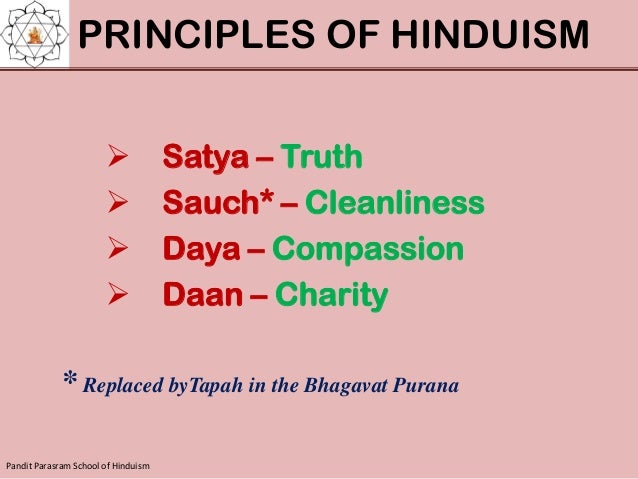
Hinduism - In the terminology used in the Hindu faith, the term 'Dana' is used to denore charity. It is one of the guiding principles of the Hindu faith. Giving 'daan' is considered to be very auspicious and an act of 'punya' (can be called a good deed). Since, a Hindu believes in the concept of 'life after death', charity of the act of giving also leads to him/her attaining nirvana (where the soul attains immortality and a person is freed from the cycle of birth and death). Now wonder, in major Hindu festivals, charity or giving gifts is considered to be an important act. For example, during Sankrant festival celebrated in the western and central parts of India, women perform the ritual of haldi-kumkum (applying turmeric and vermillion to other married women) and giving gifts since this period is considered auspicious to undertake charitabke work. Ethical and religious values of Hinduism advocate charity to enhance the quality of one's life as well as to purify one's live, The giver, through his/her good deed achieves respect, satisfaction, prestige and prosperity while the one who receives, usually the one who is needy gets some hope for life. It is through charity that good social behavious will be inculcated in the individual. Hindu religious texts, offer a philosophical perspective on the practice of charity. The Bhagvad Geeta and The Mahabharata emphasize the importance of charity - what is to be given and to whom it has to be given, with rationale for the same. For example, 


The Taittiriya Upanisad says: 

“Give. Give with faith. Do not give without faith. Give with sensitivity. Give with a feeling of abundance. Give with right understanding.”

http://learningtogive.org/faithgroups/voices/phil_persp_of_hinduism.asp


Islam - In Islam, the term charity is called 'Zakat' and it literally means to purify. It means that when you offer a part of your wealth to the needy, you purify yourself. 'Zakat' is part of the obligations that a Muslim has to perform - these obligations are - belief in one God, belief in the Holy Quran, pilgrimage, fasting and charity (zakat). Zakat is a part of the wealth that one has to offer as part of one's identity of being a Muslim. In the ideal social system envisioned by Islam, based on welfare, money is not a thing to be stored. It is like the blood of a social system that has to keep moving, just as blood keeps circulating in our body to help it function efficiently. The concept of charity, is thus, an instrument to balance the system since no section of society should have the privilege of abundance. Everyone has the right to welfare. According to Islam, if a person has abundant wealth, then charity becomes obligatory for him/her. Islamic theology prescribes set rules about who can give charity and who can receive charity. Charity, for example, cannot be given to the immediate family because assisting the immediate family is obligatory on the individual. Zakat can be given to distant relatives who are not comparatively well off, to the poor and the needy, orphans, widows, slaves, prisoners, non-Muslims etc. In Islam, 'Zakat' is compulsory. Apart from the concept of Zakat, there are two other concepts of charity namely 'Sadaqah' or 'Khairat', which is not obligatory and can be given in any form. Charity in Islam, need not be given only in the material form. It can be given in deeds, words, acts of kindness and any other form which the person feels comfortable with. Example - helping financially, helping someone in studies, sharing knowledge, advising someone for his/her better or any other such act of social welfare. 

The Holy Quran says,

Let those who give alms, both men and women, and lend unto Allah a goodly loan, it will be doubled for them, and theirs will be a rich reward.

Qur’an 57:18 http://learningtogive.org/faithgroups/voices/phil_in_islam.asp


Thus, it is not difficult to decipher that in both Hinduism and Islam, the concept of charity is presented in similar thoughts. It is considered to be serviec to God and believed to lead us on the path to God. In both religions, undertaking charitable work is believed to be an action of the highest order. Both religions also prescribe that doing charity must involve an inherent belief in goodness and compassion and should not be undertaken from the prism of elitism, authority and power. If one carries out charity under the air of superiority or pretension, then such an act of charity is worthless in the eyes of God. That a noble intention is must while involving oneself in charity is the idea forwarded in both the religions. The underlying meaning and purpose of charity, in Hinduism and Islam, is to rise above selfish thinking, individualistic way of life and perform the duty that one is bound to in one's role as a human being. Thus, charity is a pious act and leads to good - for the one who performs it and for the one who receives it. These simple, strikingly similar ideas permeate the philosophy and practice of Hinduism and Islam. 

Tuesday, 5 May 2015

Malala Gives Me Hope

Nobel Peace Prize winner Malala Yousafzai's work is not unknown to the world. She stands out as an inspiration to deprived, oppressed and marginalized populations with her sheer grit, determination and guts demonstrated by her in the wake of an attack on her by the Pakistani Taliban because she was defying their diktat of disallowing girls from the Swat valley in Pakistan to attend school. The youngest winner of the Nobel Peace Prize, Malala bravely survived a horrendous and brutal attack to continue with her relentless advocacy for empowering young girls through the medium of education. My interface with her work began when I was gifted her autobiography (I am Malala: The Girl Who Stood Up for Education and was Shot by the Taliban (Weidenfeld & Nicolson, 2013) by my brother.
http://www.womensweb.in/2015/02/malalas-autobiography-book-review/. It proved to be an inspiring read. It also sent shivers down my spine as I read about her and her father's struggle to educate young boys and girls in Pakistan and the opposition that they encountered in their endeavours. This line of hers remains etched in my mind and over time me and my family have come to admire this young and little but gutsy and spirited lady from Pakistan - "One Child, One Teacher, One Pen And One Book Can Change The World". 

In Nepal last year, for SIT's (School of International Training) CONTACT South Asia program, I heard Malala speak from the platform of the Nobel Peace Prize ceremony. Once again she inspired me with her very articulate ideas about how education can transform the world. It was a delightful moment for Indians and Pakistanis sharing the forum to hear to Kailash Satyarthi, an Indian and Malala, a Pakistani share the Nobel peace prize together. This came as an affirmation of the fact that if these two enemy countries joined hands, they could conquer the world. The purpose that drove Satyarthi and Malala was also very similar ... upliftment and betterment of children, the hope for this world.

And then to give me more inspiration, came a song on Malala which got me glued the very first time I listened to it on YouTube. The song is titled "Malala gives me Hope" and is a tribute by a music band in Pakistan 'Laal' to the courage shown by Malala. This song for me gives the perfect message of peace and combines the power of music and feminism to effectively demonstrate what one young lady full of courage can do to change this world in her own way. Just listen to this song and you will know about Malala's story, how she faced the extremist elements of Taliban, how she continued to fight for the girl child's rights despite the threats to her life and the way she came to be known as Pakistan's brave voice who did not fear those who were manipulating religion to meet their selfish ends. The song is spirited, full of beats, amazing lyrics which convey the essence of Malala's struggle and its impact in Pakistan and has the right, upbeat mood to make you listen to it again and again. Once I'd heard this song, I just could not stop listening to it because to me it was a wonderful and brilliantly done job of using music as a tool to communicate change and peace. Music and words associated with it can be a tool for social change and the song by Laal just proves this right. It is a significant way of conducting advocacy over an issue. The song was recorded in English and that remains my only grouse, Because the song should reach all corners of Pakistan and South Asia, and English is a language that most are not familiar with in the sub-continent. So, recording the song in various native languages like Hindi, Urdu, Punjabi, Sindhi can be helpful. Albeit, the song successfully weaves in a narrative of Malala's life story and this is the message that should reach out to audiences. The song was released in 2013 and features lead guitarist and vocalist Taimur Rahman and Haider Rahman on flute (http://tribune.com.pk/story/578644/malala-inspires-documentary-song-at-home-and-abroad/). It is gratifying to hear this song because it is just near to perfect in symbolizing Malala's struggle and rightly creates an atmosphere that denounces war and extremism. It has a story like feel to it. It gives hope and does not shy away of directly confronting issues that face Pakistan in modern times. 

Sample these lines 

Well the Taliban they run the country
From the north of Wazirstan
They make a few of their people happy
They don't care about the rest of them

They have supporter in higher places
Who turn their heads to the city sun
And they given them the fancy money
To tempt anyone who come

In its praise of Malala, the song also exposes the various issues that plague Pakistan and how the government in that country is turning a blind eye to these. In such a despondent scenario, there is still hope, as the song conveys, in the form of Malala who is the shining light for Pakistan and its young men and women. The ultimate form of 'hope' is Malala because she dared to raise her voice against those who were hell bent upon denying rights and freedom to young girls in Pakistan, therefore, robbing Pakistan of its bright future. The theme of hope runs through the song and through the last lines this hope for peace is kept alive when the singer hums -


Can't you see that the tide is turning
Don't make me wait till the morning comes 

Music in any language can be the most impactful medium of promoting peace because music has a universal language ... a language that nobody really knows yet understands. Music remains an ageless, timeless and immortal medium that people can easily connect with and relate to. I have realized this repeatedly, especially when I listen to musicians like Yanni who with their soulful music have managed to sway audiences irrespective of gender, nationality and religion. The power that music possesses can comfortably transcend man made barriers. Even as an Indian, listening to this song filled me with a feeling of peace, tranquility and inspiration, even making me dance to its tune. It filled me with more pride and respect for Malala and her mission. Truly music can connect even enemies and bring them to the same page. I am sure, after listening to this song you all will share my thoughts on the power of music to promote peace. 

Sunday, 26 April 2015

Nationalism and Extreme Patriotism: A Threat to Global Peace


"Nationalism is an infantile disease. It is the measles of mankind."~ Albert Einstein

An American patriot is rumored to have once said, "My country, right or wrong, I stand by it." 
While it is arguably a very noble trait to stand up for and support your own country, is deriding another country the way to go about doing it? Was Patriotism really meant to be what we see nowadays? Or has it now been converted into a twisted self-centered propaganda mechanism? Is Nationalism merely is a belief, creed or political ideology that involves an individual identifying with, or becoming attached to, one's nation? Or is it an extreme form of patriotism marked by a feeling of unjustified superiority over other countries?
In the current modern World, Patriotism to the masses is about supporting their country, even when the country is in the wrong. It is about abusing and their "enemies", even when they are suffering. It is about considering themselves morally superior. Why? Just cause it is THEIR country.

The current scenario in Syria provides a proper example. The continuous US-led bombing has killed hundreds of innocents, who were already suffering at the hands of the ISIS. The beautiful and ancient cities have been reduced to rubble. And yet major public opinion in the US is with the Government carrying out more air strikes.   Why? Cause the Government considers the Syrian Government and ISIS as enemies and it is the duty of US citizens to support their Governments wars against the enemies. Innocent lives are merely collateral damage for them. Very often while fighting against something wrong, unknowingly we become what we were fighting against. In India, has Patriotism been reduced to merely supporting our Cricket team during the World Cup and insulting countries like Pakistan and Bangladesh whenever we get a chance?
For an Indian to be patriotic, does he really need to abuse Pakistan and hate Pakistanis? Do we really need to treat people Bangladesh, Nepal, and Bhutan as if they are below us? The moment we say that we are better than them cause this is my country and I will support it to the death, we are throwing logic and reasoning out of the window. And that is the first step to extremism. History is the proof that whenever someone considered their country superior than the others around them, it did not end well for the entire world. Be it Hitler, Napoleon or the English East India Company.
I know a lot of those reading this will argue that all other countries are guilty of doing the same, and they are right! Every country does this while preaching of world peace on the other hand. For the world to be at Peace no country should consider itself morally superior, cause we are all suffering together.
The reason there is so much hatred in our sub-continent is that from the very young age children in India are told that we are better than Pakistan. Similarly, children in Pakistan are manipulated the same way. They are taught to blame India for every minor fault. We are taught to ridicule them and taunt them for everything. In general opinion of India, Pakistan is a barren wasteland of people who only worship God and get trained as a terrorist. Similarly, people in Pakistan might consider India as a bully big brother which wants it destroyed. What either side keep forgetting is that both Pakistan and India are a beautiful part of the very same land. It was all part of the same country once, and the very same world. We ridicule Bangladesh when immigrants cross over to India and refer to them as refugees and consider them as people living on India's mercy. We criticize Sri Lanka, even when Indian fishermen get caught after violating International Maritime Laws. Why? Just cause we should support our country, even when they are wrong?  What we do not understand, is for one to be a proud Indian, hating Pakistan is NOT an essential criterion. Just as to be a proud Hindu, you need NOT hate Muslims or Christians and vice versa.  You can love your country. Doesn't mean you have to hate others.


There is also a huge difference in being an anti-national and ant-Government. Everyone who speaks out against the Government is NOT a terrorist. History is proof that those who oppose their Governments may also be the true patriots. It is the duty of a real patriot, to not only love its country but to also stand up and speak when its Country is doing something wrong.
Extremist Patriotism is to blame behind all hindered peace processes. It is our belief that by insulting and abusing another country, we are actually showing our Patriotism. That does NOT show our Patriotism. It merely incites hatred towards the other Countries and encourages an irrational sense of superiority.  Only through honest dialogue can peace be achieved.


I am not against being proud of our culture and heritage and rich history. I am against anyone considering that their culture and heritage is better than someone else's.


A major problem with India-Pakistan relations has always been the fact that both sides care too much about what was their past and too little about what we can achieve together in the future. 

Thursday, 16 April 2015

Empathy as a driving force for peace and conflict resolution

I begin to write this on a rather hopeless note despite being part of conversations that are so full of hope and optimism. Everyday, now since I have moved to Ahmedabad (a city in the western part of India), I have been driven to thinking how empathy is a lost cause for our country. As I drive back home from my workplace everyday, the rush of traffic that I witness has led me to this view. The streets in my country are not empathetic. People are outdoing each other on the roads everyday, there is a general hurry to reach to one's destination. In the process, I have realized that people (and I do not exclude myself) have become resistant to inculcating empathy within themselves. Most of the conflicts on the 'road', which is a public space are witnessed due to a lack of empathy. We are not sensitive to the fact that the way we drive may cause harm to others, may cost them their life and may result into chaos in the way people move. The idea is to be the first one, find space and not think of the 'other'. In discussions with my father, on the lack of empathy in the public space, I have come to the conclusion that most of the times we think only about ourselves. In a conflict zone too, parties think about their own gains, losses, strategies, moves and tactics. Since a conflict emanates from differences in goals, attitudes and perceptions, thinking about the 'other' is obviously absent.

When Kirthi threw up words like empathy, mutual respect, religious tolerance, co-existence and international equality in the discussion last week, I faced a tough time ranking these in an order of priority primarily because I could not figure out how these values which are so much shared in their very nature and characteristic, be disconnected from each other. More importantly, how is it possible to attain peace while emphasizing on one value and underscoring the other. Yet, I ended up placing empathy on the top of the ladder. There were several reasons for this. One, I thought and believe that empathy can serve as a basis for remaining values to be achieved in the process of resolving conflict. An attitude and position of empathy can lead to mutual respect, religious tolerance, harmonious coexistence and international equality. It is as if all of the other values are offshoots of empathy. An empathetic understanding in conflict can lessen differences, make more room for conversation, spring up never thought of solutions and help us to look at positions beyond our own narrow and restrictive lens.

Googling on empathy, I learnt it means 'understanding and sharing' feelings of others. To add to this, empathy also means care, placing yourself into the shoes of the 'other', imagining how it would be to look at and experience the world from his/her position, learning about and recognizing the sufferings and loss of others and moving beyond a very self-centered attitude to life. To me, what creates conflict is not a perceived sense of difference in aims and aspirations, but also a lack of empathy. This happens not only at the macro level, but in a day to day life situation as well. For examples, lets take a look at conflicts in personal spaces like family and friends. There emerge feelings like:

"Why should I always be the one to understand, compromise and give up my claims."

"She doesn't seem to care, understand and adjust."

"He only thinks of himself, not realizing how much he is hurting others in the process."

Each one of us tend to experience such feelings whereby it is ingrained that the 'other' is not sensitive to our needs. In cultivating and absorbing an empathetic demeanour, we only create more and more space for positivity, accommodation and solutions. In my view, empathy can be a driver of peace because:
  • Empathy as a trait serves to be the basis of positive attitudes and actions in human beings
  • Empathy can lead to several other desired values that foster peace
  • Empathy can bring us to a position of dialogue
  • Empathy can help us look at conflict in ways we never thought of previously
  • Empathy can create safer spaces for people with differences to come to common ground
  • Empathy displaces you from both the position of privilege and victimhood
  • Empathy helps us to 'know' - knowing is important because conflicts often aggravate owing to ignorance of what it is to be like on that side of the fence
  • A position of empathy can make you a good listener - must to resolve conflicts
  • Empathy empowers you to better understand your own realities 


As an example, of how I believe 'empathy' is significant to my work in peace building and conflict resolution between India and Pakistan, it is empathy which has enabled me to undertake conversations with Pakistanis, previously impossible in a hostile atmosphere. It is because of empathy that I am able to continue these conversations despite healthy differences in opinion. I empathize with the fact that my Pakistani friends are struggling against political violence and terrorism in their country and it is insensitive of me to bracket them as people who believe in and perpetrate violence. It is because of empathy that I am able to appreciate the amazing work that they do to counter violence and help the underprivileged in their country. Empathy has exposed me to a Pakistan that was unknown to me beforehand. Today, I feel, they are no different, in fact, we are on the same page when dealing with hostile attitudes and politics that breathes on extremism and hatred. How, in any case, would I feel one with them if not from a position of empathy? Empathy is the solid ground on which I have built long lasting friendships with my friends from across the border. I do not pity or sympathize with them, neither do they. We don't see each other as victims. We see each other as partners in building a more peaceful world. Empathy empowers us, on both sides, to deal with differences and still be the best of buddies. It is this empathy that makes us talk for hours together, where, at times, listening to the 'other' becomes more important that one's speaking itself.

It is for empathy that I understand how painful Peshawar 2014 was to them and it is for empathy that they can read the pain in my voice when I talk of Mumbai 2008. Empathy is what dissolves and renders redundant those compulsions of having to prove our Indianness and Pakistaniyat! Empathy is what has made me fall in love with Pakistani TV dramas and them to go crazy over Bollywood. If not for empathy, we'd still be where we were - isolated, disconnected, aloof, ignorant and still fighting. And though I started out quite gloomy, I end here with hope!