Wednesday, 17 June 2015

Good friends are like stars, you don't always see them, but you know that they are always there.


I'd like to start this post by saying a huge huge thank you to Kirthi Di and the team at Red Elephant Foundation for providing us with this opportunity. It has been a tremendously rewarding experience. Building Peace Project : Global Conversations were invaluable in developing a understanding of the different cultures and backgrounds participants hailed from. It was also amazing to discover that relative strangers from all over the world can have so much in common with each other. The live learning happening during the sessions has helped me gain a sensitive and constructive view of conflict situations, different from textbooks and the media. For all of this, credit and much gratitude to the organization.


And also to The Best Team ever! Big big shout out to all of you inspiring, incredible people!


Dear Kirthi Di,
You showed me how it is possible to spread one's inner warmth, joy and peace in all the lives that one touches. You are indeed a guiding light for me! Aaand, it helps that we are the same type of crazy. Bibliophiles, For the Win! <3


Dear Nidhi Di,
There is no doubt who enjoyed the sessions most in our team! ;) Your exuberance and verve made them so much fun for all of us too! I'm fortunate indeed to have a mentor like you this close to home!


Dear Sourya,
I'll completely admire the way you are not afraid to put stand by your point, no matter how controversial. Wish we could have heard your voice more but definitely enjoyed your clever comebacks in the chat box!


Dear Moham,
You are very insightful and articulate. It was so interesting having discussions with you. Your commitment to peace and spreading the message of peace is an inspiration for me.


Dear Dani,
Your kindness shines bright and warms all whose lives you touch. It was great to share this learning space with you.


Dear Pooja Di,
You're a beautiful person with a totally unique view of life. Conversations with you were so riveting and I felt like I could listen to your voice forever!


Diphus, Salma Di, You guys will always be in my thoughts when I think of the project! Wish we could have seen more of you. Same goes for Lea and Sadiq!


Over these ten weeks, a wide range of topics related to peace advocacy were covered. Not only that, but we shared ever so many personal stories and anecdotes that I'm sure will stay with all of us forever. I wish I could have done justice to the writing part, but that is what next time is there for I guess.
Meanwhile a big thank you to everyone for being so patient and encouraging while I blundered my way through the discussion. You all are absolutely phenomenal people!


I really hope we all can meet in person someday. Meanwhile, we'll surely be in touch. Some bonds are forever. Till then, lots of love and best wishes to you all! May all of you find peace and prosperity in your lives.

Monday, 8 June 2015

Choosing Peace over Violence

Session 8 ... we are now closer to the end. But for me, this will be a journey to remember, a journey to cherish!

This was by far the most interesting session in #GlobalConversations. Now wonder we overshot time and continued to discuss until our enthused spirits permitted us. While the focus of the session was on violence and its varying manifestations, the primary point of debate was a question on whether 'men too are victims of patriarchy?" Not surprisingly, we agreed to disagree. Precisely, why we are conversing.

In whatever limited understanding I have developed about peace, it has been reiterated that one cannot understand the dynamics of peace without delving deeper into the phenomena of 'conflict' and 'violence'. The dichotomous tendencies associated with the two terms ensure that while we embrace peace, we detest violence. While there are negative, undesirable values associated with the philosophy and actions that condone violence, I get uncomfortable when I am told that total eradication of violence is what human race should aim for. Apart from being an ideal state of affairs, what one needs to question is whether this is actually desirable. Violence definitely does have disastrous effects as it leads to loss of life and property, nature and its creation. But violence is essential for the progress of human race. It has over times led to evolution of the human kind. The existence of unjust systems and practices cannot be denied. It is a reality that one encounters each day. At times, when there are few options left, it is violence that has helped to overturn these structures and ensure that liberty, equality and rights remain firm. Violence must not be examined from the spectrum of 'good' or 'bad', since these water-tight compartments aren't really going to help us to attain peace. At times, violence is good, it is the only choice that one is left with, and its eventual consequences turn out to be positive and life-changing. We have occupied a cycle of evolution in which we are bound to confront ills, wrongs. That is where human beings face a challenge. They are presented with a choice - to pick either violent means, or to choose peaceful ones. I believe it is unfair to judge which of these means is more forthright and moral, since the context and circumstances of putting this to use is inevitable when explaining our choice.

When a woman or a man faces domestic abuse, she/he may choose to react violently owing to several factors such as anger, frustration, fear. In cases of sexual harassment on streets, what choice is one left with, if one is overpowered by the assaulter. Thus, there are no clear boundaries to be drawn as the lines of distinction disappear when one is left to make a choice. This choice is better left to the individual and her/his circumstances. I have seen women suffering violence and then emerging as victorious in life. Facing violence at the hands of their near and dear ones, they realized that they did not deserve this. Violence provided the much needed impetus to take a decision that led to self-worth and dignity. In such cases, violence provided the push towards a peaceful and dignified life. This obviously does not mean that violence has to be endorsed. It should always be avoided and be considered as a last resort. Don't we do that in our everyday negotiations with life? Faced with any problem, we make attempts to resolve it with peace and resilience, failing which people have a tendency to take to violence.

For me, choosing peace over violence has not come naturally. In a previous post, written on this very blog, I have been candid to admit that peaceful behaviour is indeed demanding and requires much moral courage. This then cannot be an excuse to resort to violence. In everyday interactions with people who come from a platform of different world views, I have often experienced anger and frustration which has led me to 'thinking violently'. I have then consciously chosen to control my emotions, talk to myself, reassuring my own self that a disagreement is fine, and even if the person remains totally on the wrong, I have told myself to continue to be friendly and move on. Nevertheless, this has at times led to immense frustration wherein my brain tells me that I should resort to some kind of violence, whereas my heart tells me to adopt a more peaceful approach.

What works best for me is when I turn violent (I am quite sure about not hitting any one, but verbal violence is a possibility), I'd like to shut myself off from everyone around me, isolate myself, move to a corner, give myself some breathing space and talk ... assure that things are fine, or will eventually be fine. In another conscious attempt, I try to think about the disastrous consequences of what will happen if a violent reaction were to emanate from my end. It would aggravate an already spoiled situation and in turn affect relationships. One way of consciously choosing peace over any kind of violence is to introspect past actions and see and decide for oneself, the kind of consequences violence leads to. That will help make a sane/rationale choice.

I want to end with a mundane example. These days road rage is a common occurrence in India. You often can see people getting off their vehicles to trash the other person, either physically or verbally, arguing and counter-arguing over who was in the right lane and who wasn't, who was driving properly and who wasn't. This often has led to cases of road rage, with people ready to kill the other person for a perceived fault. While driving, I realized that I was not indulging in physical violence but was emitting a lot of negative emotions, energy directed towards people I thought were bad at driving and lacked basic traffic sense. At times, stopping in the middle of the road, I have abused the offender to attain a level of gratification, only to be consumed with hatred for the next hour. This wasn't helping me of course. I then decided to switch gears, choosing to not react at all or react with a smile. These days, I don't rue that people have a poor sense of traffic. Instead, I smile at them and let them proceed first understanding that are experiencing a greater sense of hurry and urgency than I am. At the end of the day, on the roads, with my vehicle, I feel peaceful and happier as I drive my way to my destination.   

Thursday, 4 June 2015

About Art and Fences

Session 4 of the Building Peace Project saw Team Hope trading insights on whether art can be used as a medium for peace advocacy. We were encouraged to examine a work of art and explain how effective it was in delivering a message of peace.In this context, I have opted to discuss the book 'The Boy in the Striped Pajamas' by author John Boyne through this blog. Big, big, big shout out to Kirthi Di for recommending and sharing the book! If anyone wants to read the book, fair warning, major spoilers ahead!


The Boy in the Striped Pajamas is a novel set during World War II. The story is told from the perspective of Bruno, a nine year old German boy. He lives with his mother, elder sister and government Officer father in Berlin. They are visited by the Fury, a childish pronunciation of the Führer, who promotes Bruno's father to the position of Commandant. This results in Bruno's family moving away from Berlin to the outskirts of a place called Out-With, an euphemism for Auschwitz. Here Bruno encounters a strange boy, separated from him by a huge fence and wearing comfortable black and white pajamas. This is Shmuel, a young Jewish boy displaced by the Nazis from Poland. Delighted to find someone of his own age, Bruno visits Shmuel everyday. Sitting on  opposite sides of the fence, they share food, stories and a fast friendship. So much that one day Bruno decides to crawl under the fence and don a pair of black and white pajamas to look for Shmuel's missing father. During this adventure, they are caught in a death march to the gas chambers and never make it back to the fence.


I found The Boy in the Striped Pajamas to be a fascinating and slightly disturbing story. The naivete pervasive throughout is what makes the story absorbing yet baffling. It doesn't seem likely that even a precious 9 year old would be so innocent of the atrocities committed in his back yard or even of the propaganda and prejudice designed for young Germans during this period. All discussions about the concentration camp and Bruno's father's job, often whispered, are conducted in a atmosphere of fear or confusion that is only too plausible, as are Shmuel's doubt, pain and silence. The similarities between Bruno and Shmuel compel us to take a deeper look at what indeed separates the two boys. The attachment between them is endearing and makes the ending so much more devastating for a reader. Their death makes it starkly evident that naive tone of the book was only beguiling. It had been long since lost on both sides of the fence when such things happened.


This book is touted by the author as a Holocaust fable. It distorts history in facts like there were no children as young as Shmuel in the camp and the electrified fences were guarded constantly. Amid accolades and fame for the book, the author has also been criticized for these inaccurate depictions. This brings out a challenge that artists often face when art is used for peace advocacy. During our session as well, we wondered whether or not art oversimplifies the subject matter. This was clearly illustrated to me by The Boy in the Striped Pajamas. In this case the simplicity was also what made the story work, which begets the question, how far is it advisable to take art, ambiguous by nature, towards explaining a sensitive topic as conflict. While it is certainly a very insightful way of putting a message across, we must also remember that we are so vulnerable when it comes to art. It is difficult to draw precise boundaries, what is merely a creative view on the situation and what is an infringement.


In this scenario, I think clarity and purity of intent in producing or attempting to interpret a particular art work is the responsibility of both the author and the reader. We have a duty to approach such art and respond to it with empathy and sensitivity. Going back to The Boy in the Striped Pajamas, the author John Boyne states that the only way he could treat the Holocaust respectfully was to view it through the eyes of a child. He uses this creative devices to make us question and think about fairness in face of cruelty, kindness that comes with a cost and challenging established world views in individual and personal ways. Beating down undeserved prejudice one person at a time.


I loved this book and I learned a lot from it. It is going to stay with me forever. The message of peace was effectively delivered when the author spoke about looking beyond and destroying fences as the one that divided Bruno and Shmuel. And ultimately, ensuring that such things don't happen, 'not in this day, not in this age.'

Tuesday, 2 June 2015

Forgiving is a difficult choice

For me, it has never been quite easy to forgive. Forgive anybody who has hurt me. The hurt has, in most cases, stayed on with me since my memory is quite sharp and I usually tend to remember situations and encounters of injustice that I have faced in life. I must admit, that to forgive one has to be brave, full of strength and compassion and willing to look beyond what I call the situation that one is faced with. Reconciling forgiveness and justice is not as easy task for anybody. To forgive, one has to be sure of the fact that justice has been delivered and now one can move ahead in life. More often than not, we tend to be too caught up in situations, engulfed by anguish and hurt that consumes us more than the person whom we pronounce guilty of committing the act of injustice.

I am yet to arrive at a situation in life where justice and forgiveness have crossed roads, trying to meet up. One or the other has always eluded me. If I am able to forgive, a sense of injustice creeps on within me and I begin to question the validity of forgiving the person who hurt me. A sense of justice renders me a proud and arrogant person who then assumes a mask of victory, while believing that when I have got what I deserved, forgiving the one who did wrong is immaterial. Trying to thus bring justice and forgiveness on the same platform is an arduous task. There have been instances of friendships going sour for me. The feeling of having done too much, having invested so much of my energy in a relationship without getting much in return except bitterness and an ungrateful attitude. At times, I have forgiven people for the sake of it. At times, it has been for letting ill-feelings drown because I was harbouring them at the cost of my own health and peace of mind. There are times when I have forgiven just to move on, because holding on to things was making life difficult. Over time, I realize that I have to make a conscious choice to forgive, it does not come quite naturally to me.

Forgiveness is an attribute of the strong and the compassionate. It is quite misunderstood to be a trait possessed by weak and mild people who are believed to lack the courage to hurt people. Is there any sense of victory in harming people just because they have not been kind to you? It in fact gives rise to a series of chain reaction and leads to a situation that turns quite ugly for the parties involved. You might never want to end up face to face with that person, never want to communicate with him/her, never want to be left alone to tackle a situation with him/her. The power of forgiving is such that it not only heals the person who is the perpetrator of 'hurt' but also the person who has been the victim of injustice. Forgiving is key to healing, to moving on, moving ahead in a positive manner. It is the key to peaceful co-existence since the sooner we forgive, the better the bonds can be forged. Forgiving is quite an under-rated value attached to peace. It is often ignored and its significance not realized. One can forgive and can thereby move closer to peace. It is difficult but it is a sensible choice that we can make for a better and more peaceful world. Forgiving does not require one to look outward. For forgiving, all you need to do is shed perceptions of you as strong and the 'other' as weak, you as morally invincible and the 'other' as morally inferior. The moment we stick to positions of power and elitism, it removes us from the processes and dynamics of forgiving. Every major religion in the world talks of forgiving as an act that leads us to a better world, a human race that is more compassionate, kind and accommodating. You forgive because you want to and not because you wish to prove a point. Forgiving from the standpoint of mercy and superiority will not be helpful because these are values that belittle the 'other' and hence your forgiving nature may vanish into thin air within moments. You will stay aggrieved, if you do not forgive from the depth of your heart, giving the 'other' an opportunity to reconsider what he/she did to you. Forgive because you want that this world should be full of people with smiles and not people with grudging hearts and faces. It is good to forgive. It is peaceful to forgive. 

Sunday, 24 May 2015

Concept of Charity in Hinduism & Islam

One always thinks of religion as the source of conflict. But, last week's discussion in #GlobalConversations illuminated me to the possibility of religion playing a role in peacemaking. I have always been curious about religion and my own thoughts on religion have varied over time. To me, religion is a powerful source of change and belief, positive spiritual transformation through which I can connect to my soul. That does not in any way signify that I dismiss religious traditions and practices as archaic. In fact, whenever possible and required of me, I happily and willingly participate in traditions. However, two aspects remain important here. Religion cannot become an unquestioned force. I, in particular, make it a point to understand why certain traditions exist and why they exist the way they are practised. A critique of what religion embodies must emerge from our own selves because religion was never meant to be a stagnant entity. It is moving, changing, dynamic and an ever-evolving entity. The fundamental principles of religion remain the same, and on a deeper examination of religious principles across religions, it becomes an interesting task to look for similar orientations. The second aspect, is what troubles me more. People, like us. who are involved in peacebuilding have always examined religion from an elitist sense and have dismissed it as the source of conflict. The later is true, but dismissal is not a helpful act. Acceptance and integration of religion into peacebuilding activities will chart a new path towards the way religion's role in peace can be looked at. A force that drives majority of the human world cannot be overlooked for its potential role in peace.

My desire has been to understand my own religion better. Apart from the Hindu faith, I have been intrigued by different facets of the Islamic faith. I was a member of an Islamic Library back in my college time, due to which I had the opportunity to explore Islam in a nuanced way. Here, I want to examine and derive similarities between the concept of 'charity' is Hinduism and Islam. A preliminary understanding of the concept drives home the fact that many aspects of what charity means to the followers of Hinduism and Islam are in fact very similar. I ackknowledge inputs from Salma Noureen, my friend from Pakistan who has helped me understand the Islamic take on charity better.

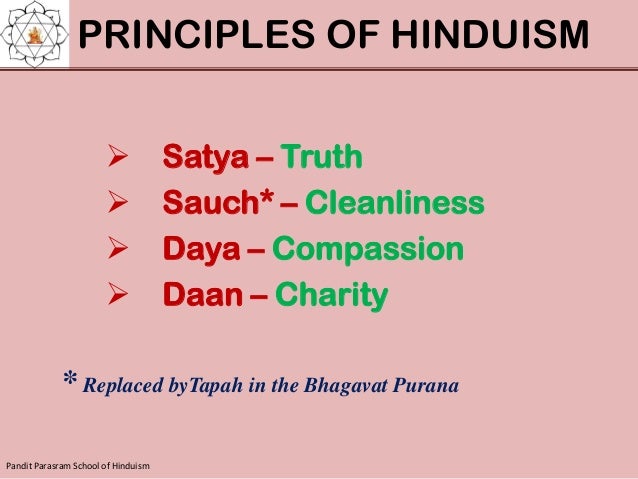
Hinduism - In the terminology used in the Hindu faith, the term 'Dana' is used to denore charity. It is one of the guiding principles of the Hindu faith. Giving 'daan' is considered to be very auspicious and an act of 'punya' (can be called a good deed). Since, a Hindu believes in the concept of 'life after death', charity of the act of giving also leads to him/her attaining nirvana (where the soul attains immortality and a person is freed from the cycle of birth and death). Now wonder, in major Hindu festivals, charity or giving gifts is considered to be an important act. For example, during Sankrant festival celebrated in the western and central parts of India, women perform the ritual of haldi-kumkum (applying turmeric and vermillion to other married women) and giving gifts since this period is considered auspicious to undertake charitabke work. Ethical and religious values of Hinduism advocate charity to enhance the quality of one's life as well as to purify one's live, The giver, through his/her good deed achieves respect, satisfaction, prestige and prosperity while the one who receives, usually the one who is needy gets some hope for life. It is through charity that good social behavious will be inculcated in the individual. Hindu religious texts, offer a philosophical perspective on the practice of charity. The Bhagvad Geeta and The Mahabharata emphasize the importance of charity - what is to be given and to whom it has to be given, with rationale for the same. For example, 


The Taittiriya Upanisad says: 

“Give. Give with faith. Do not give without faith. Give with sensitivity. Give with a feeling of abundance. Give with right understanding.”

http://learningtogive.org/faithgroups/voices/phil_persp_of_hinduism.asp


Islam - In Islam, the term charity is called 'Zakat' and it literally means to purify. It means that when you offer a part of your wealth to the needy, you purify yourself. 'Zakat' is part of the obligations that a Muslim has to perform - these obligations are - belief in one God, belief in the Holy Quran, pilgrimage, fasting and charity (zakat). Zakat is a part of the wealth that one has to offer as part of one's identity of being a Muslim. In the ideal social system envisioned by Islam, based on welfare, money is not a thing to be stored. It is like the blood of a social system that has to keep moving, just as blood keeps circulating in our body to help it function efficiently. The concept of charity, is thus, an instrument to balance the system since no section of society should have the privilege of abundance. Everyone has the right to welfare. According to Islam, if a person has abundant wealth, then charity becomes obligatory for him/her. Islamic theology prescribes set rules about who can give charity and who can receive charity. Charity, for example, cannot be given to the immediate family because assisting the immediate family is obligatory on the individual. Zakat can be given to distant relatives who are not comparatively well off, to the poor and the needy, orphans, widows, slaves, prisoners, non-Muslims etc. In Islam, 'Zakat' is compulsory. Apart from the concept of Zakat, there are two other concepts of charity namely 'Sadaqah' or 'Khairat', which is not obligatory and can be given in any form. Charity in Islam, need not be given only in the material form. It can be given in deeds, words, acts of kindness and any other form which the person feels comfortable with. Example - helping financially, helping someone in studies, sharing knowledge, advising someone for his/her better or any other such act of social welfare. 

The Holy Quran says,

Let those who give alms, both men and women, and lend unto Allah a goodly loan, it will be doubled for them, and theirs will be a rich reward.

Qur’an 57:18 http://learningtogive.org/faithgroups/voices/phil_in_islam.asp


Thus, it is not difficult to decipher that in both Hinduism and Islam, the concept of charity is presented in similar thoughts. It is considered to be serviec to God and believed to lead us on the path to God. In both religions, undertaking charitable work is believed to be an action of the highest order. Both religions also prescribe that doing charity must involve an inherent belief in goodness and compassion and should not be undertaken from the prism of elitism, authority and power. If one carries out charity under the air of superiority or pretension, then such an act of charity is worthless in the eyes of God. That a noble intention is must while involving oneself in charity is the idea forwarded in both the religions. The underlying meaning and purpose of charity, in Hinduism and Islam, is to rise above selfish thinking, individualistic way of life and perform the duty that one is bound to in one's role as a human being. Thus, charity is a pious act and leads to good - for the one who performs it and for the one who receives it. These simple, strikingly similar ideas permeate the philosophy and practice of Hinduism and Islam. 

Thursday, 21 May 2015

Stories of my Grandmother

My grandmother was called Shrimati Indumati Potdar. We don't know her date of birth precisely, only that she was born in the month of Bhadrapad.


She was educated in Nagpur till she passed 9th std. At the age of 19, she married to my grandfather, Natwarlal Potdar, a telegram clerk and sent away to live at Chopda, a small village on the outskirts Jalgaon. Within 8 years, she had given birth to four children.


It was the year 1972, ten years after their  marriage when my grandfather passed away due to a cardiac arrest. My grandmother was 29 years old, a mother of four and completely without any means to secure their future or her own.She was bereft of her husband and if that was not grief enough,  tradition decreed that she observe a period of mourning for her husband by not stepping out of the house for one whole year. Trapped in the house, a young widow, with unsupportive and condescending in laws, who were barely getting by themselves.


Till she escaped. According to its policies, the Indian Post Office offered the post held by my grandfather to his nearest blood kin. With the support of some close friends, she made the decision to take up the job and packing her two youngest ones, she left for Nagpur.


Even then life was not easy. She had to take up her studies again and clear the 10th std exam to be eligible for the job. Being the only earning member in the family, she regularly sent funds back to Chopda as well. Eventually, she was able to bring the two elder children to live with her again. Educate them and arrange suitable marriages for them. Life went on.


She retired from the post office while I was young. We used to spend hours and hours watching TV. I have so many memories of lying beside her and listening to her tell stories. It used to be my favorite part of the day, going to Dadi's house.


I was ten years old when we left home to move to Mumbai and sixteen when she passed away. During the intervening six years we were barely connected by a bunch of motley phone calls and visits. Even then, our relationship was always that of a doting grandmother and a much beloved grandchild.


I never had a real conversation with her about how it had been. There are so many threads to the tapestry of her life I haven't explored. So many more perspectives to be unveiled.


All I have to know the strong, brave woman that my grandmother was, are a handful of stories. It is these stories that have had a very real and tangible effect on my life. My dad was brought up by her. Unconsciously it may have been, but he learned the value of self reliance and confidence from her. My parents have raised me in a similar culture of independence. They have taught me, by example, theirs and hers, to think for myself and stand by my decisions. It is a part of the legacy my grandmother bequeathed to her family.Her journey is an inspiration for me. Thinking of her gives me confidence and a glorious example to follow.


So when I sit down on women's day to think of all the brave, strong women who have touched my life, her name is top of the list. And will always be.


I believe in the power of storytelling for empowerment. I believe that stories can inspire change. I believe that I have so much more to learn from my grandmother and even though she isn't here to tell me herself, her stories will always be a part of who I am and who I hope to become.


I miss you, Dadi. And I love you.

Saturday, 16 May 2015

Unconventionally Married

I have been married for four years now. I married Tushar in the year 2011 and had just begin my PhD in Political Science from The Maharaja Sayajirao University at Baroda in Gujarat. It had been just two months that I'd started off with my thesis work and marriage was on the card. Indeed, I was very happy about beginning a new and lovely phase of life with many expectations and hopes. I believe this is how any Indian girl embraces marriage. She is full of dreams and hopes which she feels her partner and new family will fulfill. I was no different, but still different in quite a many ways. From the beginning of my doing a PhD, I was quite determined to devote my full time and energy to it, to focus on studying hard and doing my best. I am also not a very traditional and conventional person and in that sense I was quite determined to break barriers. Studying post marriage was full of challenges and it invited raised eyebrows, surprises and question marks when I told people that I was pursuing Ph.D. In that sense, the modern Indian society is quite funny. For women, both parents and society opine that everything should happen at the right age - studies, employment, marriage, children etc. Means you have to be ambitious, competent and yet not neglect duties and responsibilities towards your family. For young girls, like me, who are raised in egalitarian, modern and progressive families, this builds up too much pressure and is a hindrance to what one can accomplish. Life is not a smooth journey, and there will be hiccups and hindrances to it. Therefore, the pressures and expectations that society in India puts on women - especially those married and working are a stereotype in my view. Throughout my marriage I have worked to defy this stereotype.

Studying after marriage was a big deal for many whom I knew, and they advised me to devote more time to my new family and relationship. I realized that I could not forgo my thesis completely because I was committed to it, I loved doing research and I have never quite visualized myself as a home-maker (no offense meant to home-makers here). I was just not the one to sit at home and enjoy the domestic bliss that life offered me. Doing a PhD meant a lot of hard work, vague reading hours, long hours at the university because when you take a topic for in-depth study you totally devote yourself to it. In the course of time, I started attending coursework classes during the weekends, which meant that apart from being away on weekdays, I was away from home during the weekends as well. Most of time was in fact spent in the university premises than at home. I was sure that this wouldn't augur well with many in my family circle, my relatives and even my parents. To add to these problems, my husband's and my weekoffs were on different days - so while we enjoyed a holiday on Saturday, I worked in the university and while he worked on Sundays, I enjoyed Sunday afternoon siestas quite often. There were times when due to my research engagements, I was not able to make it to family functions, had to miss meeting friends and had to forego all the simple joys that a newly married girl hopes to partake in. These were tough times but with the support of my husband, who hardly cribbed about my packed schedule and my non-availability, even giving me space and freedom to devote long hours of study, I have managed to sail through. There were times when people ridiculed me and questioned me as to why I was working so hard. Some cautioned me about the consequences of not paying required attention to my marriage. I also became the subject of taunts when I refused to compromise my study timings to participate in functions and rituals. But I was determined and broke every stereotype that is associated with studies after marriage. I knew I was married to my PhD much earlier than I was to my husband! Thankfully, he understood. To everyone who now asks me how I managed to accomplish, my reply remains that though marriage is definitely the beginning of new things and dreams in life, but you need not sacrifice yourself and your old dreams for this new beginning. Adjust, but don not compromise and more importantly ... be yourself ... marriage was not meant to change you or bring to the world a new you ... a you who lives life according to the wishes of others.

Post my PhD completion, I took another drastic step. I moved to a different city for a job. That means, I am now living away from my husband and family for the sake of a career. Usually, it is the wife who moves with her husband in case he shifts to another town for professional growth. In my case, I have again broken the stereotype and have been the one to shift even as my husband continues with his work in our hometown. This means that we are now staying apart and people are quick to judge me as a woman who prioritized her career over family. That of course does not bother me because my family totally supports and understands me. However, as a woman, who has at every step defied the conventions of marriage, I am often asked questions like - "when will the two of you stay together?", "when will you think of starting a family?", "staying apart can be risky for marriage". There have been pressures, expectations and advice, many a times unsolicited and I have tried my best to turn deaf ears to it. Right now, I am enjoying this phase of staying as a college girl, managing things on my own and learning from the experience of venturing beyond my comfort zone because I never stayed away from home. This is a phase I will cherish. I will also, in my own little way, continue to rebel against established norms and structures, to be able to do what I really want to and continue to do that while being married! Because life gives us only one chance at living, and I remain confident of making the most of it.