One always thinks of religion as the source of conflict. But, last week's discussion in #GlobalConversations illuminated me to the possibility of religion playing a role in peacemaking. I have always been curious about religion and my own thoughts on religion have varied over time. To me, religion is a powerful source of change and belief, positive spiritual transformation through which I can connect to my soul. That does not in any way signify that I dismiss religious traditions and practices as archaic. In fact, whenever possible and required of me, I happily and willingly participate in traditions. However, two aspects remain important here. Religion cannot become an unquestioned force. I, in particular, make it a point to understand why certain traditions exist and why they exist the way they are practised. A critique of what religion embodies must emerge from our own selves because religion was never meant to be a stagnant entity. It is moving, changing, dynamic and an ever-evolving entity. The fundamental principles of religion remain the same, and on a deeper examination of religious principles across religions, it becomes an interesting task to look for similar orientations. The second aspect, is what troubles me more. People, like us. who are involved in peacebuilding have always examined religion from an elitist sense and have dismissed it as the source of conflict. The later is true, but dismissal is not a helpful act. Acceptance and integration of religion into peacebuilding activities will chart a new path towards the way religion's role in peace can be looked at. A force that drives majority of the human world cannot be overlooked for its potential role in peace.
My desire has been to understand my own religion better. Apart from the Hindu faith, I have been intrigued by different facets of the Islamic faith. I was a member of an Islamic Library back in my college time, due to which I had the opportunity to explore Islam in a nuanced way. Here, I want to examine and derive similarities between the concept of 'charity' is Hinduism and Islam. A preliminary understanding of the concept drives home the fact that many aspects of what charity means to the followers of Hinduism and Islam are in fact very similar. I ackknowledge inputs from Salma Noureen, my friend from Pakistan who has helped me understand the Islamic take on charity better.
 Hinduism - In the terminology used in the Hindu faith, the term 'Dana' is used to denore charity. It is one of the guiding principles of the Hindu faith. Giving 'daan' is considered to be very auspicious and an act of 'punya' (can be called a good deed). Since, a Hindu believes in the concept of 'life after death', charity of the act of giving also leads to him/her attaining nirvana (where the soul attains immortality and a person is freed from the cycle of birth and death). Now wonder, in major Hindu festivals, charity or giving gifts is considered to be an important act. For example, during Sankrant festival celebrated in the western and central parts of India, women perform the ritual of haldi-kumkum (applying turmeric and vermillion to other married women) and giving gifts since this period is considered auspicious to undertake charitabke work. Ethical and religious values of Hinduism advocate charity to enhance the quality of one's life as well as to purify one's live, The giver, through his/her good deed achieves respect, satisfaction, prestige and prosperity while the one who receives, usually the one who is needy gets some hope for life. It is through charity that good social behavious will be inculcated in the individual. Hindu religious texts, offer a philosophical perspective on the practice of charity. The Bhagvad Geeta and The Mahabharata emphasize the importance of charity - what is to be given and to whom it has to be given, with rationale for the same. For example,
“Give.
Give with faith. Do not give without faith. Give with sensitivity. Give with a
feeling of abundance. Give with right understanding.”
http://learningtogive.org/faithgroups/voices/phil_persp_of_hinduism.asp

Islam - In Islam, the term charity is called 'Zakat' and it literally means to purify. It means that when you offer a part of your wealth to the needy, you purify yourself. 'Zakat' is part of the obligations that a Muslim has to perform - these obligations are - belief in one God, belief in the Holy Quran, pilgrimage, fasting and charity (zakat). Zakat is a part of the wealth that one has to offer as part of one's identity of being a Muslim. In the ideal social system envisioned by Islam, based on welfare, money is not a thing to be stored. It is like the blood of a social system that has to keep moving, just as blood keeps circulating in our body to help it function efficiently. The concept of charity, is thus, an instrument to balance the system since no section of society should have the privilege of abundance. Everyone has the right to welfare. According to Islam, if a person has abundant wealth, then charity becomes obligatory for him/her. Islamic theology prescribes set rules about who can give charity and who can receive charity. Charity, for example, cannot be given to the immediate family because assisting the immediate family is obligatory on the individual. Zakat can be given to distant relatives who are not comparatively well off, to the poor and the needy, orphans, widows, slaves, prisoners, non-Muslims etc. In Islam, 'Zakat' is compulsory. Apart from the concept of Zakat, there are two other concepts of charity namely 'Sadaqah' or 'Khairat', which is not obligatory and can be given in any form. Charity in Islam, need not be given only in the material form. It can be given in deeds, words, acts of kindness and any other form which the person feels comfortable with. Example - helping financially, helping someone in studies, sharing knowledge, advising someone for his/her better or any other such act of social welfare.
Let those who give alms, both men and women, and lend unto Allah a goodly loan, it will be doubled for them, and theirs will be a rich reward.
Qur’an 57:18 http://learningtogive.org/faithgroups/voices/phil_in_islam.asp
Thus, it is not difficult to decipher that in both Hinduism and Islam, the concept of charity is presented in similar thoughts. It is considered to be serviec to God and believed to lead us on the path to God. In both religions, undertaking charitable work is believed to be an action of the highest order. Both religions also prescribe that doing charity must involve an inherent belief in goodness and compassion and should not be undertaken from the prism of elitism, authority and power. If one carries out charity under the air of superiority or pretension, then such an act of charity is worthless in the eyes of God. That a noble intention is must while involving oneself in charity is the idea forwarded in both the religions. The underlying meaning and purpose of charity, in Hinduism and Islam, is to rise above selfish thinking, individualistic way of life and perform the duty that one is bound to in one's role as a human being. Thus, charity is a pious act and leads to good - for the one who performs it and for the one who receives it. These simple, strikingly similar ideas permeate the philosophy and practice of Hinduism and Islam.
My desire has been to understand my own religion better. Apart from the Hindu faith, I have been intrigued by different facets of the Islamic faith. I was a member of an Islamic Library back in my college time, due to which I had the opportunity to explore Islam in a nuanced way. Here, I want to examine and derive similarities between the concept of 'charity' is Hinduism and Islam. A preliminary understanding of the concept drives home the fact that many aspects of what charity means to the followers of Hinduism and Islam are in fact very similar. I ackknowledge inputs from Salma Noureen, my friend from Pakistan who has helped me understand the Islamic take on charity better.
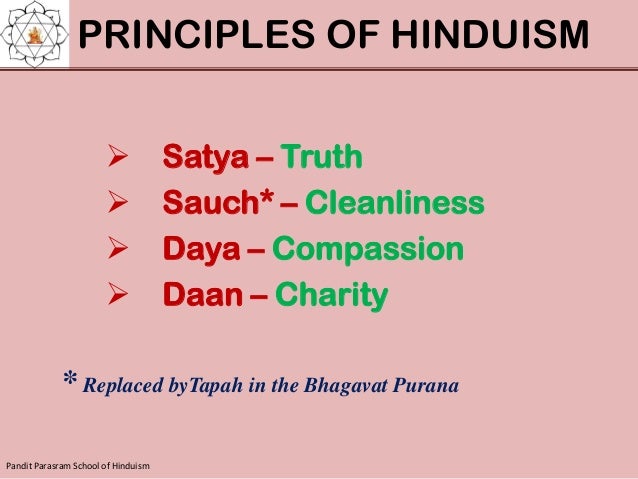 Hinduism - In the terminology used in the Hindu faith, the term 'Dana' is used to denore charity. It is one of the guiding principles of the Hindu faith. Giving 'daan' is considered to be very auspicious and an act of 'punya' (can be called a good deed). Since, a Hindu believes in the concept of 'life after death', charity of the act of giving also leads to him/her attaining nirvana (where the soul attains immortality and a person is freed from the cycle of birth and death). Now wonder, in major Hindu festivals, charity or giving gifts is considered to be an important act. For example, during Sankrant festival celebrated in the western and central parts of India, women perform the ritual of haldi-kumkum (applying turmeric and vermillion to other married women) and giving gifts since this period is considered auspicious to undertake charitabke work. Ethical and religious values of Hinduism advocate charity to enhance the quality of one's life as well as to purify one's live, The giver, through his/her good deed achieves respect, satisfaction, prestige and prosperity while the one who receives, usually the one who is needy gets some hope for life. It is through charity that good social behavious will be inculcated in the individual. Hindu religious texts, offer a philosophical perspective on the practice of charity. The Bhagvad Geeta and The Mahabharata emphasize the importance of charity - what is to be given and to whom it has to be given, with rationale for the same. For example,
 http://learningtogive.org/faithgroups/voices/phil_persp_of_hinduism.asp

The Holy Quran says,
Let those who give alms, both men and women, and lend unto Allah a goodly loan, it will be doubled for them, and theirs will be a rich reward.
Qur’an 57:18 http://learningtogive.org/faithgroups/voices/phil_in_islam.asp
Thus, it is not difficult to decipher that in both Hinduism and Islam, the concept of charity is presented in similar thoughts. It is considered to be serviec to God and believed to lead us on the path to God. In both religions, undertaking charitable work is believed to be an action of the highest order. Both religions also prescribe that doing charity must involve an inherent belief in goodness and compassion and should not be undertaken from the prism of elitism, authority and power. If one carries out charity under the air of superiority or pretension, then such an act of charity is worthless in the eyes of God. That a noble intention is must while involving oneself in charity is the idea forwarded in both the religions. The underlying meaning and purpose of charity, in Hinduism and Islam, is to rise above selfish thinking, individualistic way of life and perform the duty that one is bound to in one's role as a human being. Thus, charity is a pious act and leads to good - for the one who performs it and for the one who receives it. These simple, strikingly similar ideas permeate the philosophy and practice of Hinduism and Islam.
